
Enterprise SEO: The Complete A-to-Z Guide for Large Websites
You know that your website has SEO problems, but fixing them is a completely different challenge. Maybe your team has spotted technical issues, content deficiencies, or areas for improvement, but making those changes seems to be an impossible mission. On big websites, SEO is hardly a matter of generating ideas. Rather, processes, resources, and cooperation between several departments are often the limiting factors.
This is the situation many big companies find themselves in. A tiny technical blunder, a bad website architecture, or outdated content can hurt thousands of pages and A lot decrease the number of organic users. Without a good plan, SEO activities end in a mess, progress is delayed, and valuable growth possibilities are passed over.
Based on our technical expertise, deep research, and transparent insights, we’ve created this piece on Enterprise SEO: The Complete A-to-Z Guide for Large Websites so you can understand the process, strategies, and tools that are needed to grow a large website.
What is Enterprise SEO?
If you know about old SEO, it is easy to understand Enterprise SEO. To understand this, we have to understand what SEO actually does.
SEO, known as Search Engine Optimization it optimizes your website pages so your website ranks at the top of Google searches. Similarly, in the enterprise, SEO is the process of optimizing large websites for big companies. Let’s understand this with an example: suppose a local shoe shop has a website with 50 pages; it is easy to optimize with the old SEO, but if we talk about NIKE, where 500,000 pages are there to optimize, there Enterpise SEO works. It helps in optimizing the high volume of data to drive real revenue and grow brand visibility.
How Enterprise SEO Differs from Traditional SEO
Enterprise SEO and Traditional SEO both share similar roots, but the difference is that one is used for small-scale industries and the other is for large-scale industries. The table shown below can clea you more about traditional seo and Enterprise SEO:
| Feature | Traditional SEO | Enterprise SEO |
| Website Size | Small to medium websites | Large websites with thousands of pages |
| Pages | Optimizes pages one by one | Optimizes many pages at circle |
| Keywords | Targets fewer keywords | Manages thousands of keywords |
| Technical Issues | Handles basic SEO issues | Solves complex website issues |
| Team | Managed by a small team | Involves SEO and developers, content & marketing team |
| Goal | Improve rankings & traffic | Drive leads, traffic, & business growth |
In simple terms, traditional SEO helps improve individual pages, while Enterprise SEO creates a scalable system to manage and optimize an entire large website as it grows.
Who Needs Enterprise SEO?
The main users of enterprise SEO are those who have large-scale websites or whose business depends on organic search traffic. Firms that operate broad product arrays, multiple locations, a substantial content base, or international sales channels also benefit from enterprise SEO services. In other words, such resources are necessary for organizations that have a large-scale operation or that want to maximize their presence in organic search results. Examples of these companies are e-commerce platforms, SaaS (software as a service), marketplaces, and banks.
The Biggest Challenges Enterprise SEO Solves
As websites become larger, SEO problems become harder to manage. Pages may compete with each other, important content may get buried, technical issues can spread across thousands of URLs, and different teams may make changes without SEO alignment. Enterprise SEO solves these challenges by creating a systematic approach that keeps the website optimized, scalable, and easier for search engines, and also helps to navigate users clearly.
Why Enterprise SEO Matters
When it comes to big corporations, SEO is no longer just a marketing channel. It is now perceived as an integral element of long-term growth. In a competitive and fast-moving environment, an enterprise needs to have a comprehensive strategy that will help it acquire the right customers at every stage of the sales funnel.
How Enterprise SEO Drives Business Growth
Enterprise-level SEO strategy supports large companies in gaining more organic visibility, grabbing the attention of the target visitors, and delivering a steady stream of leads. It encourages sustainable business expansion while decreasing reliance on paid ad campaigns.
The Benefits of Enterprise SEO
The bigger the business, the larger the website and its pages, which can be hard to manage and optimize. For this level of enterprises need the right tools, strategies, and team to manage their website so it can generate real revenue over time. Many businesses spend on ads to bring traffic, but it is costly in the long run, and here enterprise SEO comes to help you. It is a systematic strategic approach that optimises your website in a way so it can show clear search results, improve the user experience, and increase visibility. Also bring the high quality leads without spending so much on paid ads. These small improvements can help in maintaining large brands at the top.
How to Build an Enterprise SEO Strategy
An excellent enterprise Search Engine Optimization (SEO) strategy does not only involve optimizing individual website pages. It connects SEO to overarching business objectives, operational procedures of the teams, and company-wide strategic plans, thereby enabling very large companies to control their available assets effectively and to deliver results that are stable, measurable, and scalable in nature.
Set Goals & KPIs
Before diving into actions and optimizations, companies need to establish what they want to achieve with SEO. Apart from vague intentions to appear higher in search results, organizations need to have specific performance goals in mind. For example, they should define whether they want more qualified visitors, higher organic revenues, or entry into new markets. Additionally, having specific Key Performance Indicators (KPIs) set allows the company to track and measure SEO progress, whether it is organic traffic growth or customer acquisition costs.
Create a Scalable SEO Roadmap
Having a well-prepared roadmap is helpful for enterprise teams since it organizes SEO work, sets priorities well, and makes sure that every effort leads to development soon. This is a sample enterprise SEO roadmap:
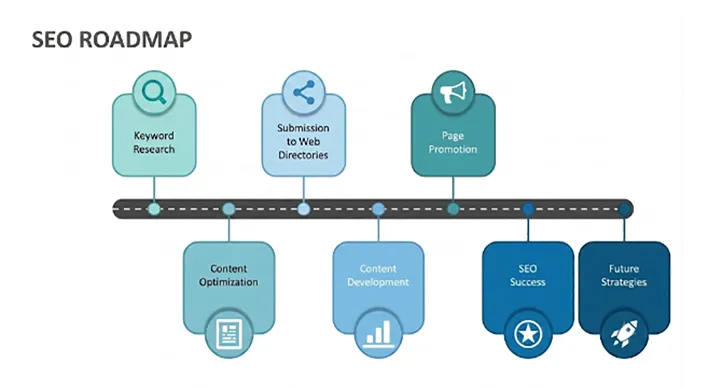
Carrying out SEO based on a solid blueprint is a great aid in staying on track with your SEO tasks, enhances communication among departments, and results in ongoing refinements that support long-term growth.
Enterprise SEO Audit
Compared to small business sites and single-page sites, large-scale web presences with thousands of pages, products, and variations require an enterprise SEO audit. This way, organizations can receive a complete assessment report to understand the current performance level and areas to improve. Enterprise SEO involves more complex aspects than regular on-page optimization, and a professional technical SEO audit will highlight the critical issues that need to be fixed.
Identify Technical SEO Issues
Technical issues can cause a lot of damage to enterprise websites, as even minor issues can impact many pages. An audit can identify problems like crawl errors, indexation issues, broken links, duplicate URLs, slow-loading pages, and rendering problems. These problems can be identified early, which can help to make websites more accessible, understand the website better, and prevent the loss of valuable pages.
Audit Content & Templates
Enterprise websites often rely on templates to create large numbers of pages, which makes content quality and consistency important. An audit helps identify thin content, outdated information, duplicate pages, and template-level issues that may affect performance. Reviewing these elements allows teams to improve page quality, remove unnecessary content, and ensure that every page provides value to users and supports the overall SEO strategy.
Find Growth Opportunities
An enterprise SEO audit isn’t just about identifying issues; it’s also about identifying growth opportunities. This analysis can help businesses identify opportunities to enhance their visibility by understanding their competitors, gaps in the keywords they are targeting, current content, and user behavior. These insights can guide teams to take action that will have the greatest impact, develop more effective content, and optimize pages that can generate more qualified organic traffic.
Enterprise Keyword Research
Keyword research at an enterprise level goes far beyond finding a list of popular search terms. Large websites often target multiple products, services, audiences, and locations, which makes it important to build a keyword strategy that supports the entire business. A well-planned approach helps identify valuable opportunities, organize content effectively, and ensure every important page targets the right audience.
Find High-Value Keywords
For company websites, the key is to target keywords that will yield real business results, rather than high search volumes. High-value keywords are the ones that will draw in users who are more likely to engage, convert, or go further down the customer journey. These opportunities can be identified by studying search trends, competitors, customer needs, and the topics that are important to the business. A good keyword strategy is one that combines competitive keywords with specific, long-tail keywords that can attract targeted traffic.
Map Keywords to Page Types
Keyword mapping basically is assigning each keyword to the exact page that it refers to without duplicating targeting and helping in improving website organization. It’s a great way of letting search engines know about your content as well as giving your visitors a much better experience.
Understand Search Intent
Understanding search intent helps enterprise teams create content that matches what users are looking for. It improves content relevance, attracts the right audience, and supports better engagement and conversions.
Technical SEO for Enterprise Websites
Technical SEO becomes more complex as websites grow in size, structure, and functionality. Enterprise websites often manage thousands of pages, multiple templates, and frequent updates, making technical issues harder to identify and resolve. A strong technical foundation ensures search engines can efficiently crawl, understand, and index important pages while providing users with a smooth browsing experience.
Crawl Budget & Indexation
Effective crawl budget management and indexation are very important to enterprise-level websites. From the image, you can see how search bots discover, crawl, and determine which are the main pages in a huge website.
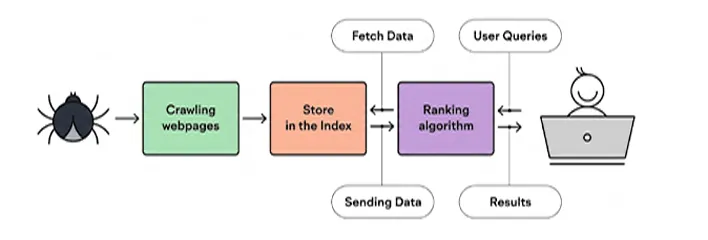
By gaining control over your crawl budget and indexation, companies make it convenient for search engines to concentrate on their most important pages, which will ultimately result in visibility being boosted and website performance improving.
Duplicate Content, Canonicals, & Redirects
Managing duplicate content, canonicals, and redirects helps search engines find the right version of a page. Doing that often means a better website structure, the ranking signals will be maintained, and visibility in search results will generally be better.
Core Web Vitals & Mobile Optimization
A website’s performance is crucial for user experience and search visibility. Slow-loading pages, poor mobile experiences, and rendering issues can impact engagement and conversions, especially on large websites with diverse audiences. Enterprise teams need to track Core Web Vitals, optimize page speed, and make sure the website is smooth on all devices.
Site Architecture & Internal Linking
Well-designed websites not only help end-users navigate vast websites but also make it easier for spiders to do so as well. A good website layout and a properly organized internal linking structure help to keep content well organized, increase page authoritativeness, and guarantee that the important pages are found easily with a few clicks.
Building a Scalable URL Structure
A scalable URL structure maintains the organization, manageability, ease of navigation, and search engine friendliness of a large website. The URL hierarchy example below shows that a clear and logical arrangement helps users and spiders navigate through the website easily.
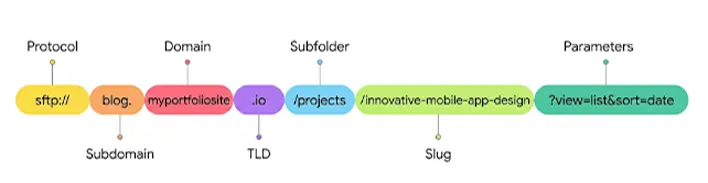
A clean hierarchical URL organization makes it easier to crawl the website and provides a better experience for the users, besides preparing the grounds for seamless website expansion.
Improve Internal Linking
Internal links are bridges between the different pages on your website and make it much easier for users as well as search engines to move around on the website. When implemented well, internal linking can help you not only improve your website’s architecture, but also distribute page authority effectively.
- Helps crawlers find and index your web pages
- Spreads out page authority
- Makes your site content more user-friendly
- Draws attention to the main landing pages
- Strengthens website structure through regular audits
Content Strategy for Enterprise SEO
Enterprise SEO is not just a matter of generating a lot of content; rather, it is a question of creating content that is most relevant to the readers. Having a well-thought-out content strategy allows businesses to better organize and manage their content, reach the exact audience, increase discoverability in search engines, and at the same time help the company achieve its long-term goals.
Build Topical Authority
Acquiring topical authority involves establishing yourself as a reliable source in your field. Rather than focusing on isolated keywords, large businesses publish comprehensive content on interconnected subjects, clarify typical user concerns, and link auxiliary pages to main product or service pages. This allows search engines to acknowledge your competence and also users to locate the right information smoothly.
Update & Consolidate Existing Content
As enterprise websites grow, older content can become outdated, compete with newer pages, or lose organic traffic. Regular content audits help identify pages that need updating, merging, or removing. Refreshing existing content and consolidating similar pages improves content quality, strengthens important pages, and supports long-term SEO performance.
Enterprise SEO Tools
Managing a large website with thousands of pages across multiple markets requires more than manual checks and spreadsheets. Enterprise SEO tools help teams identify technical issues, monitor website performance, discover new keyword opportunities, and make data-driven decisions more efficiently. These platforms simplify complex SEO tasks by automating analysis, tracking changes, and providing valuable insights for continuous improvement. With the right technology in place, businesses can maintain website health, optimize content at scale, and adapt quickly to changing search trends.
Technical SEO Tools
Technical SEO tools help enterprise websites identify issues like broken links, crawling and indexing problems, duplicate content, and performance errors. They make it easier to monitor website health and ensure search engines can crawl and understand important pages.
Keyword Research & Reporting Tools
Keyword research and reporting tools help enterprise teams understand what their audience is searching for and identify new growth opportunities. These tools provide insights into keyword performance, rankings, competitors, and SEO progress. By analyzing this data, businesses can improve their strategies, target valuable search terms, and focus on keywords that deliver meaningful results.
AI & Future of Enterprise SEO
With the increasing intelligence of search engines, enterprise SEO is evolving beyond traditional rankings. Businesses need to create useful, trustworthy, and well-structured content that both users and AI systems can easily understand. By combining strong technical SEO with high-quality content and a great user experience, enterprises can stay visible and competitive in the future of search.
AI Search & Overviews
AI search is changing how users find information by providing direct answers instead of only displaying traditional website links. Enterprise websites need to create accurate, trustworthy, and well-structured content that answers user questions clearly and helps AI systems understand, evaluate, and reference their information in search results.
Preparing SEO Strategy
Preparing for AI search starts with strong SEO fundamentals. Businesses should focus on technical SEO, high-quality content, and a great user experience to stay visible as search continues to evolve.
Measuring Enterprise SEO Success
Enterprise SEO is not just about rankings and traffic – it is about visibility, leads, and revenue. By analyzing the right SEO metrics, you will be able to track the impact of your optimization efforts and identify opportunities for improvement. The proper measurement framework will enable you to demonstrate the value of your work and optimize your strategy based on tangible results.
Track Rankings, Traffic, and Conversions
SEO tracking is just one of many ways businesses can get a more thorough understanding of their SEO. The image below gives enterprises a snapshot of some of the core metrics to be on the lookout for, such as keyword rankings of the keywords, organic search visits, user interaction, and conversion rates.
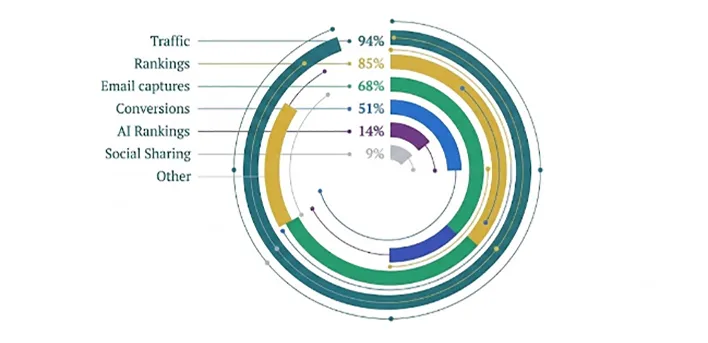
If these metrics are watched closely, companies will know how their SEO efforts have paid off, where they are falling short in the areas of SEO, and how they can take it to a higher level through the use of reliable information from their decisions.
Measure SEO ROI
Measuring SEO ROI helps enterprises understand how their SEO efforts contribute to business growth. By tracking revenue, leads, conversions, and customer acquisition from organic search, businesses can evaluate the true impact of their SEO strategy.
Common Enterprise SEO Mistakes to Avoid
People spend months making the best website interface, creating content, improving their SEO strategy, and fixing technical issues, but they are still not getting the results because they are making some simple and small mistakes that become gaps in their SEO process. By understanding the most common mistakes, it becomes easier to avoid them.
- Ignoring Technical SEO Issues
Large-scale websites have thousands of pages that require constant attention. Due to the complexity of enterprise SEO, technical issues such as crawling and indexing problems, duplicate content, and broken internal links tend to arise.
Fix: Regularly audit your website to identify and resolve technical SEO issues before they impact performance.
- Publishing Content Without SEO Governance
Many large-scale websites are plagued by issues arising from the lack of control over the content management process. With multiple contributors, enterprises often struggle to ensure consistency, avoid repetition, and deliver high-quality publications.
Fix: It is essential to implement standardized guidelines and carefully review the content creation and publishing process to ensure all entries comply with established best practices.
- Focusing Only on Rankings & Traffic
While tracking keyword performance and increases in organic traffic is important, enterprise SEO should not be measured exclusively by these factors.
Fix: Businesses should shift their focus to more refined metrics such as conversions, revenue growth, and the number of sales-qualified leads or customers acquired through organic search.
- Treating enterprise SEO like Regular SEO
Enterprise SEO is much more involved than basic on-page optimization. Enterprises have thousands of pages to update, making it inefficient to adopt traditional methods when optimizing content.
Fix: Use scalable solutions like automation, templates, and enterprise SEO tools to manage growth efficiently.
- Neglecting Website Updates & Optimization
Enterprise websites require regular content, SEO, and technical updates to stay competitive. Ignoring these updates can reduce website performance, weaken search visibility, and affect the overall user experience.
Fix: It is critical to maintain a steady pace in terms of technical and content updates and continue investing in on-page SEO practices to stay ahead of the competition.
- Poor Internal Linking & Site Structure
Many enterprise websites suffer from poor internal linking due to their complexity. As a result, important pages lack sufficient internal links, which affects their ability to attract traffic.
Fix: Enterprises should work on updating their site structure and internal linking strategy to ensure all valuable assets have strong authority and are easy to access.
- Lack of Team Collaboration
Enterprise SEO involves multiple teams, including SEO, content, development, and marketing. When these teams do not work together, it can lead to delays, inconsistent strategies, and missed SEO opportunities.
Fix: Align SEO, content, development, and marketing teams to ensure smooth implementation of SEO strategies.
Avoiding these pitfalls can help enterprises maintain a strong presence in organic search, gain valuable insights, and scale their efforts for long-term sustainability.
Final Thoughts
Enterprise SEO isn’t about chasing rankings or publishing more pages. It’s about creating a website that search engines can understand, users can trust, and your business can continue to grow with. The bigger your website becomes, the more important it is to have a clear strategy instead of relying on quick fixes.
This piece helps you understand Enterprise SEO: The Complete A-to-Z Guide for Large Websites. Real results come from consistently improving your website, solving technical issues, creating useful content, and adapting as search continues to evolve. That’s what separates websites that grow steadily from those that struggle to maintain visibility.
If managing Enterprise SEO feels overwhelming, you don’t have to figure it out alone. At WebxTalk, we help businesses simplify complex SEO challenges with strategies built for long-term growth. Whether you’re scaling an existing website or planning for the future, the right approach today can create opportunities that last for years.
FAQs
What is enterprise SEO?
Enterprise SEO is the process of optimizing large websites with thousands or even millions of pages to improve search visibility, organic traffic, and business growth. It focuses on technical SEO, scalable content strategies, automation, site architecture, and managing SEO across large teams and platforms.
Who needs enterprise SEO?
Enterprise SEO is ideal for large businesses, eCommerce platforms, SaaS companies, marketplaces, news websites, and organizations with hundreds or thousands of web pages. Companies that depend heavily on organic traffic for revenue often use enterprise SEO to maintain visibility and compete in competitive markets.
How is enterprise SEO different from traditional SEO?
Enterprise SEO deals with much larger websites, complex structures, and higher competition compared to traditional SEO. While regular SEO may focus on improving a few pages, enterprise SEO requires scalable solutions for managing thousands of pages, technical issues, internal linking, content optimization, and collaboration between multiple teams.
How long does enterprise SEO take to show results?
Enterprise SEO results depend on website size, competition, technical issues, and the quality of implementation. Some improvements may appear within a few months, while significant organic growth usually requires consistent optimization over six months or longer.
What tools are used for enterprise SEO?
Enterprise SEO teams use tools such as Google Search Console, Google Analytics, Semrush, Ahrefs, Screaming Frog, Sitebulb, BrightEdge, Conductor, and enterprise-level reporting platforms to analyze performance, find issues, and track SEO progress.
Why is enterprise SEO important for large websites?
Enterprise SEO helps large websites improve rankings, increase organic traffic, fix technical issues, and create a better user experience. Without a proper strategy, large websites can suffer from duplicate content, poor site structure, indexing problems, and missed ranking opportunities.
How does enterprise SEO improve organic traffic?
Enterprise SEO improves organic traffic by optimizing thousands of pages, targeting valuable keywords, improving technical performance, strengthening internal linking, and ensuring search engines can properly crawl and understand the website.
What is the difference between enterprise SEO and local SEO?
Enterprise SEO focuses on improving the visibility of large websites across broad markets, while local SEO helps businesses rank for location-based searches. Enterprise SEO often involves thousands of pages, whereas local SEO usually focuses on specific locations and services.
What is an enterprise SEO audit?
An enterprise SEO audit is a detailed analysis of a large website to identify technical issues, indexing problems, content gaps, ranking opportunities, site structure issues, and areas affecting organic performance.
How do you measure the success of enterprise SEO?
Enterprise SEO success is measured through metrics such as organic traffic growth, keyword rankings, conversions, revenue generated from organic search, click-through rates, technical health improvements, and overall SEO ROI.




 Yes, I Want Growth