
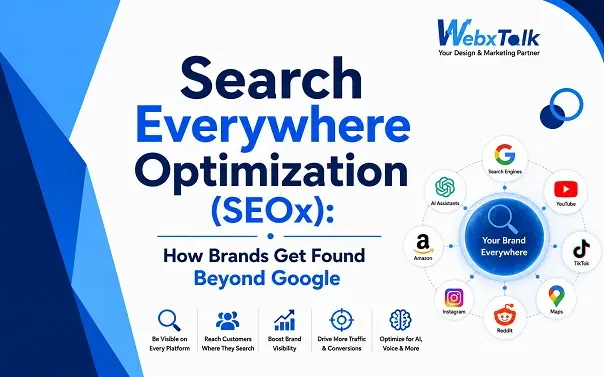
Search Everywhere Optimization (SEOx): How Brands Get Found Beyond Google
Search is definitely different these days. Although Google is still very important, it is now clear that it is not the only means by which people get their information, discover brands, compare products, or even come to a decision. For instance, some of the searchers may resort to YouTube, Reddit, social media, online stores, or even AI tools. Each of the channels listed corresponds to the searcher’s needs.
With the advent of Search Everywhere Optimization (SEOx) – an idea of how we should get the brand out of Google – brands should look at search as a broader experience rather than just trying to get indexed on Google. It makes them visible on the different channels and devices that audiences are already using. So, if a brand decides to be visible at different platforms and channels, this new approach does not only consider what a particular search engine is looking for but also how a normal user comes across and explores information from various sources.
A change in this direction is both a difficulty and a new prospect for a business. If a brand is seen to have a good presence in one place, it does not always imply the brand is being found everywhere. With a successful SEOx strategy, it is possible for the brand to make itself available and reach the consumers of a particular product/service in various ways, making it much simpler for customers to meet, learn, and remember the company.
What is Search Everywhere Optimization (SEOx)?
SEOx is a new method to optimize the content on different channels so it can make a brand visible on the channels where people stay more active. Not just Google, but there are other channels present, such as ChatGPT, an AI chatbot; video content providing YouTube and TikTok; community-based spaces like Reddit; marketplaces like Amazon; and voice assistants. All these has its own user base and way of operation. Rather than aiming at the top of one Google results page, SEOx involves being the go-to answer on every such platform that a significant part of the population now uses as their first search choice!
Understanding the Meaning of “Search Everywhere”
When they say the search can reach anywhere, it basically means that people aren’t limited anymore – they don’t only use one app (typically Google) to get an answer to a question. It used to be that a query first started and ended at the search engine; now it’s divided across many platforms, like a TikTok video, a Reddit post, a YouTube clip etc. Besides answering people by giving them direct links from AI tools, one of the things that makes a business successful is knowing where your clients really find the information, and then making sure you’re one of the options they get.
Importance of SEOx in Modern Search
Google visibility alone doesn’t mean that your brand. Shoppers go through various channels before making their decision. Like, if they want to buy headphones, they use multiple e-commerce platforms to compare the price and quality with reviews, and also ask questions to chatbots; after doing all that, they make their final decision to buy it. So a brand that is totally invisible on such panels will fall out of that decision-making phase even though it is well ranked on Google. SEOx is relevant because it shows the real scenario of consumers’ searching and comparing behavior, allowing firms to have a more varied presence as opposed to just relying heavily on one traffic resource.
The SEOx Ecosystem: Where People Search Today
There is no single starting point for online discovery anymore. The platform someone chooses can change based on the question, product, or decision they are trying to make. This creates a wider search landscape for brands, with each channel offering a different way to reach potential customers.
- Traditional Search Engines – Google, Bing.
- AI Search Platforms – ChatGPT, Perplexity, AI Overviews
- Social and Video Search – YouTube, TikTok, Instagram, LinkedIn
- Community Search – Reddit, Forums, G2
- E-commerce and Local Search
Why Search Is Expanding Beyond Traditional Search Engines
Search habits have changed because expectations have changed. People increasingly want fast, specific answers from whatever platform they’re already using — rather than opening a new tab for Google every time a question comes up. That’s part of why a product review, a how-to question, or a purchase decision might now start on YouTube, Amazon, or even directly inside an AI chat instead of a search engine. For businesses, this means classic keyword-and-ranking strategy on its own isn’t enough anymore. Content now needs to work across formats and platforms, not just within one search algorithm.
How SEOx Works Across Different Search Experiences
SEOx is about tailoring a brand’s content to the search behaviors and preferences of users on different platforms. For instance, someone who has a need for a brief Google answer might find the structured nature and clarity of a web page most appealing. But, for a YouTube video searcher, the key factor will be if the video is engaging and has good information.
On Reddit, the community will probably be more attracted to genuine stories and authentic discussions. SEOx bridges the varying search landscapes of multiple platforms by ensuring that appropriate content forms exist in the most appropriate contexts, rather than sticking to a single method that is the same across all platforms.
SEOx vs SEO vs AEO vs GEO: Understanding the Difference
SEO is a term that you might have heard of long ago. The recent additions to the scene are AEO and GEO, while SEOx is more comprehensive. These name tags may seem alike, yet the objectives they are aiming at, in a sense, differ quite a bit.
| Strategy | Main Focus | Where Brands Get Found |
| SEO | Improves website visibility in search results | Google, Bing, and other search engines |
| AEO | Offers direct answers to user questions | Snippets, voice assistants, answer platforms |
| GEO | Get seen in AI responses | ChatGPT, AI Overviews, Perplexity |
| SEOx | Present everywhere | All of the above |
How AI Is Changing Search Discovery
Getting the exact keywords right matters less now than asking a good question. People can describe a problem in plain language instead of guessing which phrase will trigger the right result. They can ask follow-ups, request clearer explanations, or dig deeper into a topic, all without scanning through a page of links first. That’s a real shift in how people search for information. It also means brands have to write content that holds up in a conversation, not just content built to rank.
Research Stage: How People Make Comparisons
Once the decision-maker(s) identify potential products or services that could fulfill their need(s), they go about comparing what’s being offered. This may involve taking a look at pricing characteristics services, examples, or asking AI to compare and contrast the choices. During this phase, the users are aiming to find out how well the products would match their requirements, but a decision of committing to one is not in the picture yet. An informative and well-organized guide would Definitely smooth this process and bring them closer to a suitable fit.
Validation Stage: How People Build Trust
After reducing their options, people usually find some justification to make themselves feel sure about a given decision. At this moment, reviews, testimonials, case studies, community forums, and recommendation posts become a big deal to them. They look for evidence that other users also had a positive experience and that the brand actually produced what it had advertised. Just a single review would probably not influence the user, but several authentic signals together would, if not immediately, over time lead to doubts being dispelled. Before making a final decision, the person may value a piece of evidence as much as the advertising that first caught their attention.
Decision Stage: How Search Leads to Action
A person’s been around with a couple software for weeks. They have browsed the reviews. They have done their evaluation of the cost. They’ve seen enough. Now they only need to get their hands dirty. It is the last phase, when all that research a real decision. Someone registers, sends a message of inquiry or clicks buy. At this stage it typically boils down to small things. Clear pricing. An easy sign-up. A website that makes them think twice! The brand that is successful here isn’t always the flashiest one. It was the one that made the final pass easy. It’s the one that was always up there there and when the person was ready it was there.
How to Build a Search Everywhere Optimization Strategy
Making an optimization strategy for Search Everywhere optimization is not about having to be on all platforms. The first you have to do is know where your audience is searching and what kind of information they are looking for at what point. A successful SEOx approach is a blend of “old-school” SEOx methods, content that adds value to the visitor, AI visibility, social presence and customer insights with a view to creating a consistent brand experience across the various search channel feeds.
To be useful everywhere your audience will turn to for answers. In fact, knowing what kind of traffic is being sought, what platforms companies should target, the creation of content that is relevant to the search, and the measurement of performance can help businesses create visibility their customers will find along their entire journey rather than having to rely on any one source of traffic.
Step 1: Understand Where Your Audience Searches
You have to understand the audience first and know which channels they use for most of their searches, not only what they search for, which gives you an idea of where to work and where not.
Step 2: Map Your Customer Search Journey
By keeping an eye on how people move from finding a brand to making a decision, you can do this by identifying the questions they ask, platforms they use, and information they need at each stage of their journey.
Step 3: Choose Platforms Based on Search Intent
Don’t put everything everywhere; do it according to the platform and according to what is searched most. For example, Reddit is used for reviews; if you put a product description there, that doesn’t make sense.
Step 4: Create Content for Different Search Environments
Humans understand better when they get the information from multiple senses, so share the information through different modes rather than posting the same thing everywhere.
Step 5: Optimize Content for Humans and AI Systems
Using a clear structure, simple words, direct answers, and well-researched content helps readers easily understand and read, and it becomes easier for AI tools to recognise it.
Step 6: Build Consistent Brand Signals Across Platforms
The information about your brand and company must stay the same on all channels; when people see this and find the same information everywhere, it builds trust and authority.
Step 7: Measure Results and Improve Your Strategy
As trends are changing, you have to update and improve your strategy accordingly to stay ahead of your competitors; not doing so can impact your rankings, audience, and brand visibility.
How to Measure Search Everywhere Optimization Success
Traditional rankings aren’t enough to measure the success of SEOx. As more people find brands on various platforms, monitor a range of indicators including search visibility, mentions (AI analysis), engagement, brand discovery, website visits, and conversions. It is crucial to note how your brand is being found and trusted within the customer journey.
Organic Search Visibility
By tracking keyword rankings, organic search, and how many impressions you get through the search engines, this helps you to understand whether your content is still reaching the right crowd or not.
Brand Mentions and Discovery
Check whether your brand is present in AI searches, not only in the Google results; the more your brand is visible in other engines, the more authority your brand will gain.
AI Search Visibility
If users search for a service, a query, or a product and your brand is not reflected in that search, it means you need to work on AI search visibility so the engines will understand and present your brand in the results.
Social and Community Engagement
Every brand owner has a desire to know how their brand communicates and resonates with the audience, just have a look on the discussion, review, comments ad and feedback to know is your content or services actually helping to people and also gives you a chance to improve.
Website Traffic, Leads, and Conversions
A web presence alone doesn’t work if it is not helping you in generating meaningful results. Check traffic, qualified leads, conversions, and inquiries to see whether your efforts are working in the right direction or not.
Common Search Everywhere Optimization Mistakes to Avoid
Creating an SEOx strategy is not about getting on every platform or making content for no reason. Much of the time, companies put in effort to become visible and don’t care about the quality, relevance, and trust of their content. Other common errors can be avoided by understanding these mistakes, developing a smarter approach, and avoiding channels that are not going to benefit a brand.
Trying to Be Present on Every Platform
Being present everywhere can be a loss of energy and time, as you need to put extra effort into posting content on these platforms that are not giving you the right audience. This is the biggest mistakes the business do: they want to be jacks of all trades and become masters of none. So be present on those channels where you get the right audience for your business goals.
Copying the Same Content Everywhere
This effortless work can bore people by watching the same thing everywhere. As the crowd wants new ways to get information, if you paste your written blog in a YouTube description and the same in a LinkedIn post that you wrote for the website, then people will not be more interested in your brand at all.
Ignoring Traditional SEO Foundations
When a new thing is introduced to smooth the work, we get excited and forget about the basic framework of SEO, overtime we don’t work on it, but we forget the foundation is still useful today for researchers and other people who want something in detail.
Focusing Only on Rankings
People think that if they get rankings, it means their business will be ahead, but they forget that the real results are conversions, brand mentions, and AI viability that tells how valuable and relevant your content is.
Chasing Every New AI Trend
This is what a lot of aimless businesses do: they blindly follow whatever is trending without knowing what actually aligns with their company goals. The business must deliver quality content that resonates with their target audience rather than wasting energy on work that has no value.
Measuring Activity Instead of Business Impact
By just watching good traffic, nice clicks, and signups, you think that strategies are working, but it is not giving to your any value to your business until it makes any kind of impact, like leads, conversions, or inquiries, which is necessary to grow a business. So, keep an eye on the business impact, not only the activity.
Final Thoughts
The landscape of search is much more than Google anymore. People are asking AI chatbots, scrolling through social media, checking out communities, watching videos, and exploring marketplaces first before coming to a conclusion about a product or service. That’s why, brands can no longer restrict efforts to just one platform, instead showing presence where people are genuinely seeking information.
To put that into practice with a practical example – that’s how a brand can become part of Search Everywhere Optimization, or SEOx. SEOx should not be taken as the sole means of SEO, the concept is essentially expanding the original SEO methods to fit into how people search in reality. The main outcome is that the material you are providing is helpful, people actually trusting your brand, and your company name appearing in all these different platforms, not search engines alone, for instance. But, none of that would work out without having some kind of random, disconnected methods.
Webxtalk has a genuine approach with one major content marketing, SEO, and marketing elements interweaving into each other. Webxtalk helps companies to design such an strategy so that they appear in the best places at the right time, target the right people and so keep growing. If you are thinking of your brand being discovered wherever people happen to be searching, Webxtalk is here not only to help but to guide you every step.
Frequently Asked Questions
What do you mean by Search Everywhere Optimization (SEOx)?
Search Everywhere Optimization is all about making your brand appear and be present wherever people search for different things such as information, answers, products, or solutions. Besides just relying on the rankings on Google, it also thinks about and considers different channels like AI tools, social media communities, marketplaces, and different search engines that people use to find and compare things for themselves.
Is SEOx replacing traditional SEO?
No, SEOx does not replace traditional SEO. Instead, it extends the idea to look for visibility past search engines. Traditional search engine optimization remains the foundation for improving website rankings, while creators live with AI gear, social platforms, groups, and other discovery channels, visible throughout the comprehensive Seek adventure.
How is SEOx different from GEO and AEO?
SEOx is about visibility everywhere on a search journey across search engines, AI tools, social media, communities, and marketplaces. But GEO and AEO address specific parts of the search: GEO assisting with where to appear in AI-answering systems, and AEO asserting the direct answers to a question.
Which platforms does SEOx cover?
SEOx is essentially about appearing in places where people look up details, weigh their options, or encounter brands. The list may contain Google and Bing, search engines, ChatGPT and Perplexity as AI tools, social networks like YouTube and LinkedIn, online communities like Reddit, marketplaces, and even local search portals. The emphasis is not on being the presence at every platform but only where people in your niche really search.
How can businesses start implementing SEOx?
Businesses can start implementing SEOx by understanding where their audience searches and then creating useful content for those platforms. Choose the channels that are most relevant to your customers first, get your content SEO-friendly so that different search experiences can find it, and monitor the data to fine-tune the strategy over time.
How does SEOx measure success?
It reflects brand performance across multiple platforms, as this works not only in a single channel, unlike the old seo in that you only need to check a single dashboard.



 Yes, I Want Growth