
E-commerce SEO: The Complete A-Z Guide for Online Stores
Running a successful online store requires more than great products—customers must find you when they search. If your products aren’t visible in search results, you’re losing sales to competitors who are.
E-commerce SEO solves this problem by helping search engines understand your store and enabling customers to discover and purchase your products. When properly implemented, SEO drives consistent, free traffic from people actively ready to buy. Some aspects of this include keyword research and product content optimization as well as site structure, technical SEO, content creation, and link development. Once these facets are working together, your business can attract customers who are already looking to purchase a product that your business offers.
This article will guide you through the fundamental components of SEO for e-commerce websites and demonstrate how to increase the discoverability of the products on your online shop while driving more relevant customer traffic and ultimately laying the foundation for continued expansion through organically earned visitors.
What is E-commerce SEO?
E-commerce SEO is the process of optimizing your online store so product and category pages rank prominently in search results. This includes optimizing product information, site structure, and technical elements to help search engines understand your inventory. The result: customers discover your products through organic search without requiring paid ads.
How E-commerce SEO Works
E-commerce SEO helps search engines understand your online store, the products you sell, and which pages should appear for different searches. It starts with finding the right keywords and optimizing your product and category pages around them. From there, factors like site structure, page speed, mobile-friendliness, internal linking, and useful content help search engines crawl, understand, and rank your website. The goal is to connect your store with people who are actively searching for the products you offer.
How E-commerce SEO is Different from Regular SEO?
SEO is like an invisible friend that helps your online store appear at the top of search results when customers look for your products or services. SEO for e-commerce is more complex because, besides dozens of page levels, an online store has countless combinations of filters and search filters which may be different for every customer.
| Regular SEO | E-commerce SEO |
| Often focuses on service or informational pages | Focuses heavily on product and category pages |
| Usually manages fewer pages | May manage hundreds and thousands of URLs |
| Content is often the main focus | Content, product categories, and technical SEO all matter |
| Conversion may mean a lead or inquiry | Conversion often means a product purchase |
| Site structure is usually simpler | Filters, Variants, and product URLs can create complexity |
This is why e-commerce SEO requires a more detailed approach to keyword mapping, site structure, technical SEO, product optimization, and conversion-focused content.
Why E-commerce SEO Matters for Online Stores
E-commerce SEO brings in people who are already actively looking for products that your website sells. Being one of the top results when those products are being searched for, you are more likely to convert your visitors into customers. As a result, brand awareness and sales figures will definitely improve in the long run.
How to Create an E-commerce SEO Strategy
The first step to a successful E-commerce SEO strategy is to know what your customers are searching for, which pages can bring them to your store, and what needs to be improved on your site. From there, you can prioritize your pages and your SEO efforts on the ones that will most likely drive relevant traffic and help you achieve your business objectives.
Setting SEO Goals for Your Online Store
To begin with, you need to understand what you want SEO to bring you: whether that is an increase in organic web traffic, higher rankings, or better sales in total. Setting clear objectives will allow you to prioritize those SEO actions that will benefit your website the most. A new business might concentrate on getting its main categories indexed by Google Maps, while an existing business could aim at boosting organic sales by optimizing relevant pages.
Understanding Your Target Customers
First, decide what you want SEO to do for your store. You may want more visitors, better product rankings, more sales, or lower ad costs. Having clear goals helps you focus on the SEO tasks that matter most instead of trying to fix everything at once. For example, a new store may focus on ranking for its main product categories, while an established store may focus on getting more sales from people searching for specific products.
Choosing Which E-commerce Pages to Optimize First
It’s not necessary to optimize all the pages at once. Begin with pages that have the greatest potential to attract traffic and sales, such as high-demand product pages, key category pages, and pages that already get some organic traffic. For example, if your “Men’s Running Shoes” category receives some traffic but has low conversions, improving it may be more valuable than spending time on the product page that receives low traffic.
E-commerce SEO Keyword Research
Keyword research is about figuring out what phrases customers are really searching for related to products that they might be interested in. You would find it more efficient if, rather than aiming at hundreds of random keywords, you were to work with keywords that are related to your topic and associate each of them with a corresponding page from your portfolio. It is recommended to focus on very specific keywords for the pages that introduce a product and to use more general (broad) words for the category and guidance pages so that your shop can attract buyers at all stages of the purchasing process.
Finding Keywords Your E-commerce Customers Actually Search
The initial step is to imagine the queries your customers may type in while hunting for your products. Analyze your key items and categories first, then turn to Google suggestions, competitor websites, Amazon, and Reddit for keyword ideas. Take the case of a skincare store: they might aim at terms like “best face wash for oily skin” or “face wash for acne-prone skin.” Later, they could insert such keyword phrases into the most suitable locations on their websites, namely product pages, category pages, informative guides, etc.
Short-Tail vs. Long-Tail for E-commerce
Short-tail keywords are broad terms like “running shoes,” while long-tail keywords are more specific, such as “best running shoes for flat feet.” Short-tail keywords may bring more searches but are usually harder to rank for. Long-tail keywords often have less competition and can attract shoppers with a clearer buying intent.
| Type | Example | Best Target |
| Short-tail | Running shoes | Category Page |
| Mid-tail | Men’s running shoes | Category Page |
| Long-tail | Running shoes for flat feet | Guide/Product Page |
| Transactional | Buy men’s running shoes | Product Page |
A mix of these keywords can help you reach shoppers whether they are researching products or ready to buy.
Understanding Search Intent in E-commerce SEO
Search intent is the reason behind a person’s search. If a user searches for “best laptops for students”, they could be comparing their opinions; but “buy MacBook Air M4” indicates strong purchasing intent. Aligning your keywords and pages to cater to different consumer intents will enable you to attract the right type of customers.
How to Find E-commerce Keywords Using Amazon, Reddit, and Competitors
Great e-commerce keywords can be found by observing where your customers are searching and comparing products. Amazon can provide you with product terms, Reddit can give you genuine customer questions, and competitor websites can provide you with keywords and topics that you might have missed. Use SEO tools to see search demand and competition to select final keywords.
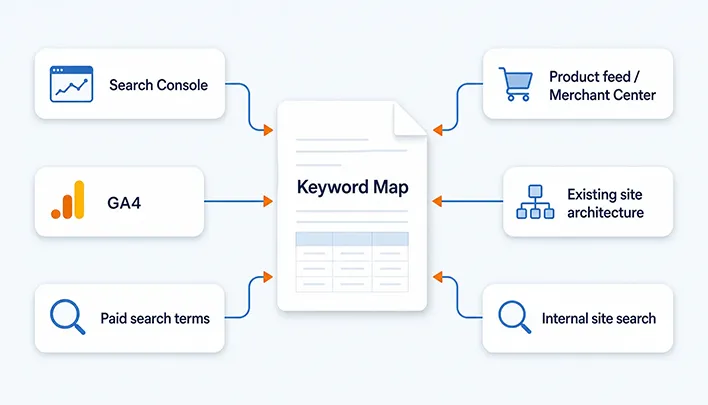
Use a combination of customer language from Amazon and Reddit, and competitor research to uncover keywords that align with real searches and buying intent.
Mapping Keywords to Product and Category Pages
Use broad words for your category pages and specific words for your product pages in line with search intent. Doing so enables each page to reach its target audience, thereby preventing multiple pages from fighting over one keyword.
E-commerce Site Structure and Navigation
One of the main features of a good e-commerce website is that it should be very intuitive to navigate. Visitors should easily go from a category to its subcategory and pick the product they want without having to make several clicks. A visible and logical site hierarchy leads to a more enjoyable shopping experience and makes it easier for search engine crawlers to locate key pages.
Creating an SEO-Friendly E-commerce Site Structure
Simplify your e-commerce website structure so that your customers and search engines can easily locate your products. The structure of a clear website may be Homepage → Category → Subcategory → Product Page. For example, a shoe shop might have Men’s Shoes → Running Shoes → Trail Running Shoes → Product. Keep important pages within a few clicks of the homepage and organize categories based on how customers actually search for your products.
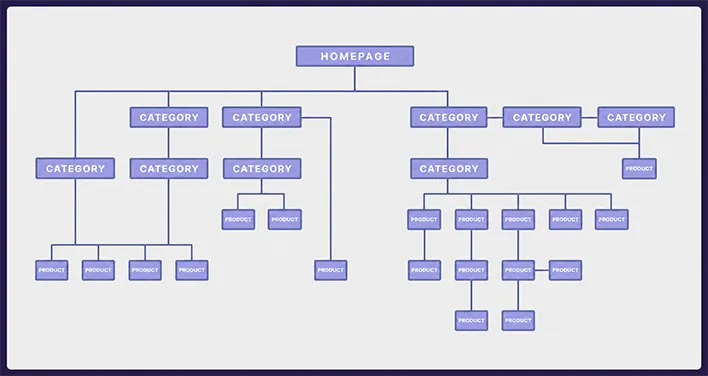
Organizing Categories, Subcategories, and Product Pages
Create a simple hierarchy of your store, with categories showing large product groups, subcategories representing a more specific topic, and product pages describing individual products. For example, a clothing store might use Men’s Clothing → Men’s Jackets → Winter Jackets → Product Page. Do not have duplicate paths or unnecessary categories; keep related products together, which makes navigation easier for customers and improves search engines’ understanding of your products’ relationships.
Improving E-commerce Site Navigation and Breadcrumbs
Navigation is a key element to helping shoppers find products without getting lost. Have clear menus, logical categories, and helpful filters to help visitors find what they want. Breadcrumbs provide an extra layer of clarity by letting users know where they are on your website, like Home → Men’s Shoes → Running Shoes → Trail Running Shoes. They also assist search engines in understanding the connection between your pages. Make navigation easy and ensure users can easily navigate back to broader categories without starting their search again.
Internal Linking for E-commerce Websites
Internal links are links that connect different pages within your online store and help users find more products. For example, a “Men’s Running Shoes” category page can link to popular product pages, and a product page can link back to its main category or other similar products. This also helps search engines understand the connections between your pages and which pages are more important. Make sure to use natural, descriptive anchor text and link related pages, not just to add links.
Category and Product Page SEO
Category and product pages are those valuable pages that attract the shoppers who are already looking for a particular product. A category page helps users explore related products, while the product page shows the detailed information about a particular product. If both pages are optimized with useful content, relevant keywords, clear titles, and a smooth user experience, they will attract the right traffic to the site and convert visitors into customers.
How to Optimize E-commerce Category Pages
Improve category pages so they can help shoppers search for products using broader search terms. By using a clean title, providing helpful text, and linking only to highly relevant products, so shopper can find the right information and product without being overwhelmed by an endless list of products.
How to Write SEO-Friendly Product Titles and Descriptions
To write the SEO friendly product titles and descriptions, you need to understand the products and shoppers; also keep the information clear, useful, and focused on what resonates with customers.
- Write clear product titles
- Create original descriptions
- Highlight key product details
- Focus on customer needs
- Use keywords naturally
A good product page gives shoppers the right information while using relevant keywords naturally throughout the content.
Product Image SEO and Alt Text
Product images can be beneficial for SEO and also help your customers understand what they are purchasing. Name files descriptively and provide alternative text that describes the image. For instance, if the image is named IMG1234.jpg, it should be named black-leather-mens-wallet.jpg with the alt text “Black leather men’s wallet with multiple card slots.” Also, compress images so your pages load quickly and without losing quality. Write alt text for accessibility first. Describe the image naturally instead of stuffing keywords into it.
Using Product Reviews and User-Generated Content for SEO
Product reviews and user-generated content can make your product pages look more helpful and trustworthy. User reviews and photos provide an actual buyer’s perspective, helping them understand the product better before making the purchase. At the same time, they enrich the natural flow of the page content because customers tend to use the same words and phrases that other buyers use.
How to Handle Duplicate and Similar Product Pages
Product variations (e.g., different colors, sizes, models) can often have similar pages on online stores. These pages may confuse search engines if they have nearly the same content. If similar URLs should all lead to one main version, use canonical tags; if each variation is worthy of ranking on its own, create unique content. Use unique product descriptions, titles, and other important details as possible.
Tip: If you don’t have a page for each small variation, don’t make one unless customers are looking for that variation.
On-Page SEO for E-commerce Websites
On-page SEO can help search engines understand the content of your e-commerce pages and make them more useful for shoppers. This involves optimizing titles, descriptions, URLs, headings, product content, images, and internal links. When these features work together, your product and category pages stand a greater chance of showing up for relevant searches and helping visitors find what they are looking for.
How to Write SEO-Friendly Title Tags and Meta Descriptions
Write title tags and meta descriptions for humans first, search engines second. Both elements should match what users will actually find on your page.
Title Tag Best Practices:
- Include your primary keyword naturally (avoid keyword stuffing)
- Lead with your most important information
- Keep it between 50-60 characters
- Example: ‘Men’s Running Shoes for Flat Feet | Supportive & Lightweight’
Meta Description Best Practices:
- Write 150-160 characters
- Include your keyword naturally
- Include a compelling reason to click (benefit, offer, or unique feature)
- Example: ‘Discover supportive running shoes designed for flat feet. Free shipping on orders over $50. Browse our collection of lightweight, cushioned styles.’
Tip: Create a title and meta description for actual searchers. A clear, accurate message that is consistent with the page will get more clicks than a title stuffed with keywords.
Creating SEO-Friendly URLs for E-commerce Pages
Ensure that your e-commerce URLs are short, simple, and easy to understand. Use the primary product or category name if appropriate, and do not use too many numbers, symbols, or parameters. Like, example.com/mens-running-shoes is simpler than example.com/category?id=12345&product=678. A clean URL structure also makes it easier for users and search engines to understand what the page is about.
Tip: Decide on a consistent URL structure from the outset. It is not a good idea to change URLs later, which can result in unnecessary redirects and SEO problems.
Optimizing Headings and Keywords on E-commerce Pages
Include your main keyword in your H1 heading and related terms in your H2s, product descriptions, and supporting content throughout. For instance, a category page for “women’s running shoes” could include the term in the H1 and mention other terms like “trail running shoes” or “lightweight running shoes” naturally. This helps Google understand the page.
Tip: Always write for shoppers first and avoid keyword stuffing just for ranking.
How to Avoid Duplicate Content in E-commerce SEO
Duplicate content is a common problem in online stores, particularly when products have similar descriptions or are listed in multiple category URLs. Don’t copy manufacturer descriptions and create original product content that describes your product’s features and benefits. If you have similar pages targeting the same search intent, then use canonical tags or redirect duplicate URLs when they are no longer required.
Tip: If two pages have nearly identical content and are both optimized for the same keyword, you may be better off indexing only one of the pages.
Technical SEO for E-commerce Websites
Technical SEO helps search engines crawl, understand, and index your online store properly. This is especially important for e-commerce websites because they often have hundreds or thousands of product pages, filters, variations, and URLs. A technically healthy website should load quickly, work well on mobile devices, use HTTPS, and make it easy for search engines to find and access important pages.
Mobile SEO, Page Speed, and Core Web Vitals
Mobile optimization is critical for e-commerce: over 60% of online shoppers browse on phones, and slow sites lose customers to competitors.
Essential Mobile Performance Metrics:
- Loading Speed (Largest Contentful Paint – LCP)
- Target: < 2.5 seconds
- Fix slow pages by: compressing images, using a CDN, minimizing CSS/JavaScript
- Check performance in Google Page Speed Insights
- Interactivity (First Input Delay – FID)
- Target: < 100 milliseconds
- Fix by: reducing JavaScript blocking, optimizing third-party scripts
- Visual Stability (Cumulative Layout Shift – CLS)
- Target: < 0.1
- Fix by: reserving space for images, avoiding unexpected content shifts
- Mobile Usability
- Tap targets must be 48×48 pixels (not tiny buttons)
- Text must be readable without zoom
- Forms must be mobile-optimized
Your Action: Test your top 10 product pages in Google Page Speed Insights and implement the suggested fixes. Pages that load in under 3 seconds rank 70% higher than slow sites.
XML Sitemaps and Crawl Budget for E-commerce Websites
If you have hundreds or thousands of products, an XML sitemap can help search engines find the most important pages of your online store. Crawl budget is the amount of time and resources search engines devote to crawling your site. Ensure that your sitemap is up to date and do not waste crawl budget on irrelevant pages, like duplicate URLs, internal search results, or endless combinations of filters.
Note: Your sitemap should contain your important, indexable product and category pages, not all the URLs your website can produce.
Faceted Navigation and Canonical Tags
Have you seen the filters on the interface of a shopping website? We know them as “filters”, which help us select the price, size, color, and brand. These are known as faceted navigation and help in creating multiple versions of the same page. The canonical tags work behind the scenes; they are pieces of code that help search engines understand which version of a page is the main one, so they don’t treat similar or duplicate pages as separate pages.
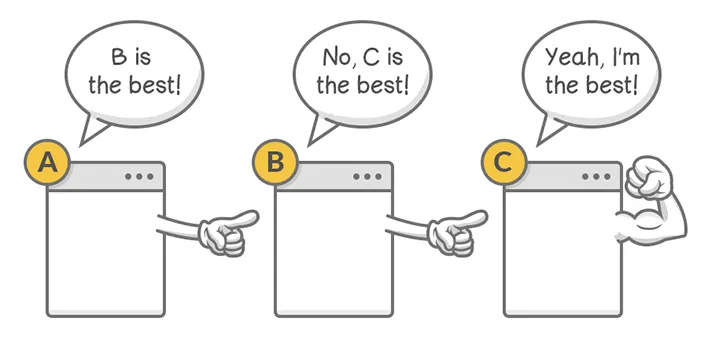
Tip: Don’t let every filter combination create an indexable page. Only allow filter pages to rank when they have real search demand and provide useful, unique content.
Pagination and Large E-commerce Product Catalogs
Pagination is a process to make browsing easier by splitting the massive web content and products into pages. This helps increase browsing speed and helps search engines discover your products easily. Also, it is important to check your site regularly so that your important products are easy to reach and older ones aren’t buried deep within your website.
How to Handle Out-of-Stock and Discontinued Products
Don’t immediately delete a product page just because an item is out of stock. If the product will be restocked, leave the page active and show whether it is in stock or not, as well as other products that are similar. If the product is no longer available, you can redirect the page to a similar product or category if there is one. If you can’t find the right alternative, you can remove the page and return the appropriate 404 or 410 status.
Tip: If possible, preserve valuable product pages that already have rankings or backlinks. Deleting a valuable page may also result in the loss of the accumulated SEO value.
Common Technical SEO Issues that Affect E-commerce Websites
E-commerce websites can face technical issues such as broken links, slow pages, duplicate URLs, poor device performance, incorrect canonical tags, and pages that search engines can’t crawl or index. These problems can make it harder for search engines to understand your site and may prevent important product pages from appearing in search results.
Tip: Run regular technical SEO checks and pay special attention to your top product and category pages. Fixing small issues early can prevent bigger SEO problems as your store grows.
Structured Data and Rich Results for E-commerce
Structured data gives search engines hints about key elements of your products, including price, availability, reviews, and ratings. When you use this correctly, it will help your product pages show extra information in search results, which includes star ratings, review counts, prices, and stock status. This gives shoppers useful information before they click and can make your listing more noticeable.
Product, Offer, and Review Schema
Product schema helps search engines understand what you’re selling, while Offer schema provides details such as price, currency, and availability. Review schema can add information about customer ratings and reviews when the markup meets Google’s guidelines. Together, these types of structured data can help your product pages qualify for richer search results.
Example: A product listing for a pair of running shoes could show the product name, price, availability, star rating, and review count in search results, giving shoppers useful information before they visit your website.
Merchant Listing vs. Product Snippets
If your products are picked up by Google in searches, you might find that the information displayed varies depending on the nature of the search results. Product snippets can, for example, feature the price, number of reviews, and whether a product is out of stock, whereas merchant listings usually give the shopper all the details required to help them decide on a purchase. Make sure your product data with pricing, offers, and stock information is all the most accurate and up-to-date versions so that search engines, like Google, can display the right details.
Content Marketing and Content Strategy for E-commerce
Content marketing can be a great way to draw in customers before they’re ready to purchase. Don’t stuff product pages with content; make it useful and answer questions, solve problems, and help shoppers make better decisions. Like, if you own a skin care shop, you might create a guide on “How to Create a Skin Care Regimen for Sensitive Skin” and, of course, link them to the products you sell. This can help to drive traffic to your website, establish trust, and lead potential customers to a purchase.
Creating Content for Every Stage of the Buying Journey
Certain visitors may not decide to purchase a product right away; that’s why it is important that your content helps people at different buying journey states. For instance, some shoppers may still be searching for just general information, whereas others can already see all the different options and are just ready to purchase. Provide your audience with content that suits these various levels of engagement ranging from enlightening articles providing helpful tips to the different comparison guides up to the most product-rich detailed pages that help finalize the customer buying decision.
| Buying Stage | What Customers Search | Content Type | Example | Internal Link Strategy |
| Awareness (Learning problem exists) | ‘How to choose X’, ‘what is X’, ‘best X for…’ | Blog guides, educational content | ‘How to Choose the Right Moisturizer’ (target: 1,500+ words) | Link to category page: ‘View our moisturizers’ |
| Consideration (Comparing options) | ‘X vs Y’, ‘best X for [condition]’ | Comparison guides, buying guides, reviews | ‘Best Moisturizers for Dry Skin: 2024 Guide’ | Link to specific product pages matching comparison criteria |
| Decision (Ready to buy) | ‘Buy X’, ‘X near me’, product name + ‘review’ | Product pages, pricing, shipping info | ‘Hydrating Moisturizer – 4.8 stars (see reviews) – Free shipping’ | Internal links to related/complementary products, shipping/return policy |
Create content for each stage so you can attract buyers early and navigate them towards the right product when they are ready to buy.
Product Guides, Comparisons, and Buying Guides
Product guides, comparison pages, and buying guides can help shoppers make confident decisions while targeting different types of search intent. Product guides educate readers about what to consider, comparison content helps them evaluate their options, and buying guides make it easier to choose the right product. Together, these content formats can attract shoppers at different stages and guide them closer to a purchase.
Top-of-Funnel Blog Content for E-commerce SEO
Content marketing can be a great way to draw in customers before they’re ready to purchase. Don’t fill product pages with content; provide useful content and address questions, solve problems, and assist shoppers in making better decisions. For instance, if you own a skin care shop, you might create a guide on “How to Create a Skin Care Regimen for Sensitive Skin” and, of course, link it to the products you sell. This can help to increase traffic to your site, build trust, and move potential customers towards a purchase.
Turning Content into Internal Links and Sales Opportunities
Your blog content should not be a dead end. Include internal links to product category buying guides and comparison pages if they can truly help the reader with their information needs. As an example, a blog on “How to Choose Running Shoes” can naturally include the link(s) to your running shoe category and even to a couple of products that the blog considers relevant. Doing this not only makes it easier for the reader to go from reading an instructional post to browsing products, doing comparisons, and ultimately purchasing. But also helps them get closer to a purchase decision without leaving the blog post as a mere sales pitch.
Link Building for E-commerce Websites
Link building helps e-commerce websites build authority and earn referral traffic from other relevant websites. Instead of chasing links from random sites, focus on earning mentions from industry publications, bloggers, suppliers, partners, and trusted websites. A strong backlink profile can support your SEO efforts and help your store compete for more valuable search terms.
Digital PR and Link Building for E-commerce
Digital PR can be a great way for e-commerce brands to get backlinks that are valuable to them by providing a reason for publishers to discuss them. You can build campaigns based on unique customer trends, publish expert insights, share interesting industry data, or create original research. For instance, a fashion company might publish a report about seasonal shopping habits and sell it to fashion and retail magazines. The idea is to get real links and coverage, not just websites to link to your store.
Supplier, Distributor, and Partner Link Building
Your existing business relationships can be a simple source of relevant backlinks. Ask suppliers, distributors, manufacturers, retailers, and business partners to list your store on their partner, stockist, dealer, or retailer pages when appropriate. These links are often highly relevant because they come from websites connected to your industry. Just make sure the link provides genuine value and avoid creating artificial link networks.
Broken Link Building and Unlinked Brand Mentions
There are two ways to find backlink opportunities. First, you find a website with a broken link and suggest your own page as a useful replacement; this is known as Broken link Building. Next, you find a website in which your brand is mentioned, but there is no link, so you can ask them to add a link. By doing this, you will improve your brand visibility and strengthen the website’s authority in search results.
International E-commerce SEO
This strategy enables online stores to attract buyers from different countries. You can’t use the same website everywhere; for this, you need to consider local search behaviour, currency, language, and shipping options. International e-commerce SEO helps the search engines to show the right products to the right people in that particular country.
Translation vs. Localization in International SEO
Translation and localization may sound similar, but they serve different purposes in international e-commerce SEO.
| Translation | Localization |
| Converts content into another language | Adapts content for a specific local audience |
| Focuses on language accuracy | |
| Example: “Sneakers” —> translated term | Example: “Sneakers” —> “Trainers” for the UK |
Not only translate the website, but keep in mind that it fits according to the search behaviour and buying decisions of the people.
Hreflang SEO for E-commerce Websites
This is a tag that helps Google understand which versions of a page are meant for each audience. If your customer is searching for the product from Uk or US so, it helps to deliver the right page to the right audience. But keep one thing in mind: each hreflang tag points to the correct and accessible pages.
Managing Country and Language Versions of E-commerce Websites
If you are selling your products in various countries, then you need to create separate versions for your website for each market, like /us/ for the US, /uk/ for the UK, and /de/ for Germany. Each version correctly shows currency, language, shipping info, and product availability. When you create these versions by using the hreflang tags, it becomes easy for the search engines to understand which page is made for which kind of audience.
How to Optimize E-commerce Content for AI Search
Creating e-commerce content that is clear, useful, trustworthy, and truly helpful to your customers is the key to being visible in AI-searched results and improving ranking on Google.
- Optimize Product and Category Content for Google AI Overviews: Develop content that addresses common customer queries and provides information on product features, benefits, differences, pricing, and availability.
- Make Content Easy for AI to Understand and Cite: Use clear headings, short paragraphs, simple language, FAQs, comparison tables, and well-organized product information, which helps maintain accurate information.
- Address Specific Customer Questions: Address the questions shoppers ask before, during, and after they make the purchase. Give direct answers that will assist them in knowing their choices and make informed decisions.
- Provide Original and Helpful Information: Provide unique insights, expert advice, detailed product information, honest reviews, and helpful comparisons rather than generic content that can be found on many other sites.
- Establish Trust and Demonstrate Knowledge: Use credible sources to back up key arguments and maintain transparency of business, product, and customer information. Consumers and AI search engines will both benefit from accurate and trustworthy content.
By making your content useful, organized, and reliable, you enhance the customer experience and make it easier for AI search engines to comprehend and utilize your content.
How to Measure E-commerce SEO Success
The success of measuring e-commerce SEO isn’t limited to merely checking your Google rankings. In fact, you must also evaluate whether an increase in organic search traffic is actually leading to your business development. Besides keeping an eye on organic website traffic and keyword rankings, monitor indicators like product visibility, conversion numbers, revenue, and the conversion rate if you’d like to know what types of SEO activities generate profitable visitors and convert them into loyal patrons of your business,
E-commerce SEO Metrics that Matter
Don’t measure e-commerce SEO by traffic and rankings alone. Look at organic traffic, keyword visibility, click-through rate (CTR), conversion rate, engagement, and most importantly, the conversions and revenue generated through organic search. These metrics give you a clearer picture of whether your SEO efforts are bringing in shoppers who are likely to become customers. A smaller amount of high-quality traffic can be far more valuable than thousands of visitors who never make a purchase.
Tracking Organic Traffic, Rankings, Conversions, and Revenue
Tracking organic traffic, rankings, conversions, and revenue can be checked by using tools like Google Search Console and Google Analytics. It will help you understand where your keywords are ranking and whether your SEO is bringing sales or not. By regularly checking this, you can see what is working and what is not.
Best Tools for E-commerce SEO Analysis
The right tools help you find keyword opportunities, monitor rankings, identify technical issues, and measure organic traffic and conversions. Here are some useful options:
- Google Search Console: Track search performance, clicks, impressions, and indexing issues.
- Google Analytics: Measure organic traffic, user behavior, conversions, and revenue.
- Semrush: Research keywords, competitors, backlinks, and site health.
- Ahrefs: Analyze backlinks, keywords, competitors, and content opportunities.
- Screaming Frog: Find technical SEO issues, broken links, duplicate content, and crawl problems.
- Google Page Speed Insights: Check page speed and Core Web Vitals.
You don’t need every tool. Start with Google Search Console and Google Analytics, then add paid tools when you need deeper competitor and SEO analysis.
Common E-commerce SEO Mistakes to Avoid
A high-performance online store still struggles to show properly on search engines if it has some fundamental SEO faults. Typical mistakes of the sort may involve having several pages with exactly the same description of a product, a weak site map, extremely slow response times of the pages, overusing keywords, neglecting technical factors, and frequently erasing helpful product pages. Fixing those points can enable a search robot to reach deeper into your online shop and at the same time improve the satisfaction of customers.
Targeting the Wrong Keywords
Selecting keywords only due to their high search volume often means potential visitors who are just shopping around with no intention of making purchases. Instead, pay close attention to keywords that reflect what your products are and accurately represent your customers’ search intents. A store that mainly supplies luxury work chairs, for instance, might find some visitors coming on ‘office chair’. Still, a term that is a bit more tailored, like “ergonomic office chair for back pain”, may attract people who are much nearer the actual purchase decision.
Tip: Rather than just looking at search volume as why, you should also base keyword selection on relevance and buying intent.
Creating Thin or Duplicate Product Content
Thin product content deprives consumers of valuable shopping information, and duplicate descriptions pose a problem because search engines find it difficult to separate two pages. Come up with distinctive product descriptions that highlight essential characteristics, advantages, uses, and shopping guide features. Rather than using identical copies across different pages, show shoppers what makes each product worth the purchase.
Ignoring Category Pages and Site Structure
One type of retail website neglects its product category pages as well as site architecture and concentrates on individual products. This kind of layout can prevent users from finding their needs and search engines from figuring out product organization. The categories you create should reflect the needs of your customers; you should provide easy-to-read URLs, and you also need to use internal linking to connect your pages.
Ignoring Technical SEO
A store can have great products and content but still struggle to rank if technical SEO problems prevent search engines from crawling or indexing important pages. Issues like broken links, slow loading speeds, duplicate URLs, incorrect canonical tags, and poor mobile performance can hurt both visibility and user experience.
Tip: Schedule regular technical SEO audits to catch problems before they affect your rankings and sales.
Poor Internal Linking and Link Building
By using internal linking effectively, you are helping not only customers but also crawlers to explore deeper into your site through blogs, product pages, etc. Then again, if you have backlinks from authoritative websites, the visibility of your site gets enhanced. Do not focus on linking every related text to each other and do not aim at gathering a lot of links if they are of poor quality. Instead, make the link relationships seem a bit natural while working to establish high-value backlinks.
E-commerce SEO Audit Checklist
A regular SEO audit helps you find issues that may be hurting your store’s search visibility and organic traffic. Use the checklist below to review your content, technical SEO, product pages, site structure, and overall performance.
Use these five checkpoints to quickly review the SEO health of your online store:
Keyword and Content Check
It is important to check that your target keywords are the same as the customer search intent and that your product content is useful, properly optimized, and relevant to them.
Technical SEO Check
Review your website’s crawlability, indexability, mobile performance, page speed, XML sitemap, canonical tags, and broken links.
Product and Category Page Check
By providing useful product information through optimized titles, descriptions, images, and structured data on the product and category pages, you will help users to make buying decisions.
Site Structure and Internal Linking Check
Check whether your content, category, and product pages are connected to the relevant internal links and have a clear website structure or not, as it matters most when it comes to ranking and user navigation.
Tracking and Performance Check
Track the performance of organic traffic, rankings, conversions, and revenue by using tools like Google Search Console and Google Analytics. This helps to check whether your SEO efforts are driving results or not.
E-commerce SEO FAQs
What is e-commerce SEO?
E-commerce SEO is the process of optimizing an online store so it appears higher in search results and attracts more organic traffic.
Why is e-commerce SEO important?
It helps your store get free, long-term traffic from search engines and can increase sales without relying only on ads.
How does e-commerce SEO work?
It works by improving your site structure, product pages, category pages, content, and technical setup so search engines can understand and rank your store.
How do I do SEO for an online store?
Start with keyword research, optimize your category and product pages, improve site speed, use internal links, and add structured data.
What are the best keywords for e-commerce SEO?
The best keywords are usually buying-intent keywords like product names, category terms, and long-tail phrases such as “best running shoes for flat feet.
How do I optimize product pages for SEO?
Write unique product titles and descriptions, add helpful details, include images with alt text, use schema markup, and make the page easy to navigate.
How do I optimize category pages for SEO?
Use clear category names, add useful intro content, include relevant keywords naturally, and link to related products and subcategories.
How do I fix duplicate content on e-commerce websites?
Use unique descriptions, canonical tags, proper URL structure, and avoid copying supplier text across many pages.
What is schema markup in e-commerce SEO?
It is code that helps search engines understand product details like price, availability, ratings, and reviews.
How do I measure e-commerce SEO success?
By tracking organic traffic, keyword rankings, click-through rate, conversion rate, and revenue from organic search.
Final Thoughts
E-commerce SEO is not a one-time task but rather a process you keep developing over time. Whether from keyword research, site architecture, product optimization, technical SEO, or content, each aspect plays a role in helping your store bring in the right audience. Working on all together, organic search can actually be an ongoing source of targeted traffic and revenue.
It’s also a good idea that your SEO campaign goes hand-in-hand with the development of your business. For instance, the introduction of variations in customer patterns, technical problems, and modifications by search engines can impact your results. Regular analyses of your webpage and enhancements of the aspects that bring you less visibility will keep you competitive and your website active.
Webxtalk can assist you if you are looking to increase the organic visibility of your shop without going through and managing every detail of the SEO process yourself. By partnering with it, your business will benefit from a well-crafted and practical e-commerce SEO strategy that aims to bring in potential online customers, boost your website ranking, and at the same time allow you to grow steadily in the long run.




 Yes, I Want Growth