
4 Fundamentals of SEO: Which Can’t be Ignored for Long-Term SEO Growth
Search Engine Optimization (SEO) is often misunderstood as a collection of quick fixes — keyword stuffing, backlink shortcuts, or chasing algorithm updates. While these tactics may provide short-term visibility, they rarely translate into sustainable, long-term growth. In this blog, we’ll break down the 4 fundamentals of SEO that successful websites consistently apply to build steady, compounding organic traffic over time — and why skipping even one of them puts your rankings at risk.
Why Long-Term SEO Growth Depends on Fundamentals?
SEO is not an overnight result; it is a long-term investment. Google’s core mission is to surface the most relevant, trustworthy, and helpful content for every search query. Websites that consistently fulfill this purpose — by prioritizing user experience, content quality, and domain authority — are rewarded with stable rankings and growing traffic over time.
Instead of reacting to every algorithm update, focus on the core fundamentals of SEO, and you can:
- Build traffic that grows and compounds month over month
- Reduce volatility caused by Google core updates
- Establish genuine credibility and trust within your niche
Let’s explore the four core fundamentals that make this possible.
Fundamental #1: Search Intent and User-Centric Content
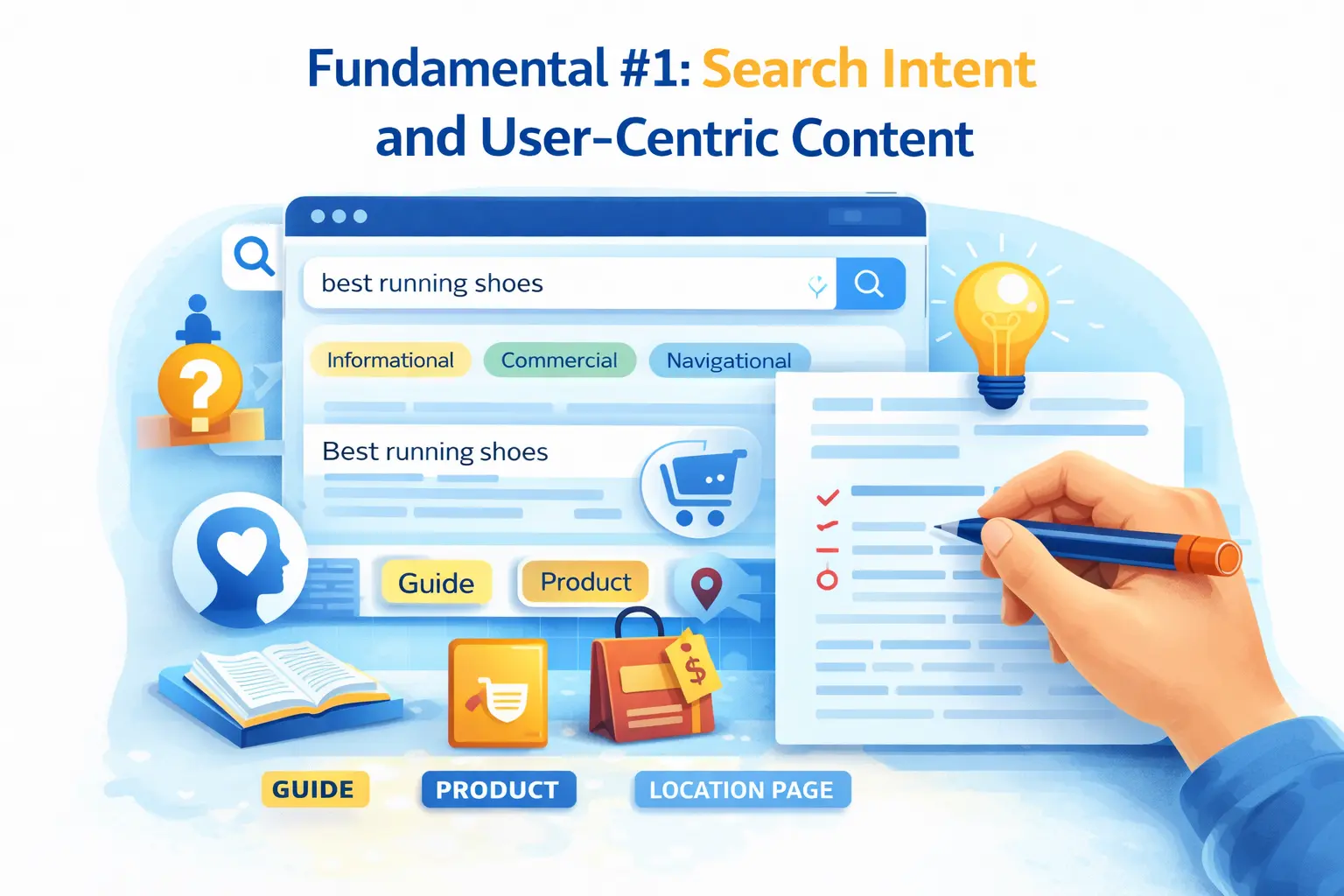
Understanding Search Intent in SEO
Search intent is the underlying reason behind a user’s search query. Google doesn’t just reward content that contains the right keywords identified through keyword research — it rewards content that genuinely satisfies what the searcher is looking for.
Misaligning your content with search intent is one of the most common reasons pages fail to rank, even with strong technical SEO and good backlinks.
There are four main types of search intent:
- Informational: Users seeking knowledge (e.g., What is SEO?)
- Navigational: Users searching for a specific brand or page (e.g., SEO services in Phoenix)
- Commercial: Users comparing options before buying (e.g., Top 10 Digital Marketing Companies in USA)
- Transactional: Users ready to act or purchase (e.g., Affordable SEO packages)
Aligning Content With Search Intent
To consistently rank for your target keywords, your content must match what users actually expect to find. This requires analyzing:
- The format and type of top-ranking results (blog posts, guides, product pages, videos)
- The depth and comprehensiveness of competing content
- The specific questions and subtopics users want answered
When your content genuinely matches search intent, engagement signals like time on page naturally improve and bounce rates fall — both of which are strong indicators of long-term SEO success.
Why This Matters for Long-Term Growth
Search intent remains largely stable even as algorithms evolve. Content that truly satisfies what users are looking for continues to perform well for years — making it one of the highest-ROI investments in SEO.
Fundamental #2: Topical Authority and Content Depth
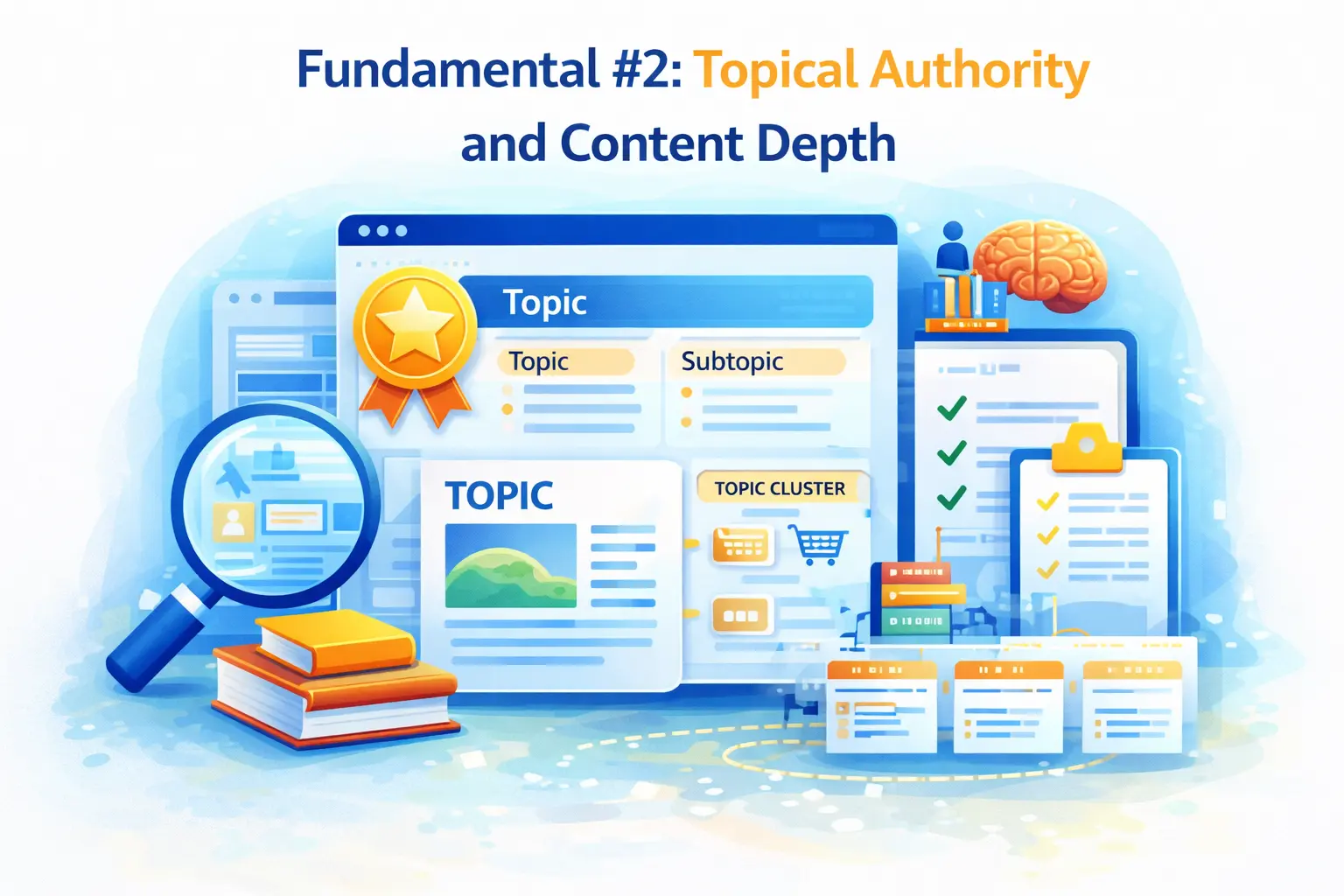
What Is Topical Authority?
Topical authority refers to how comprehensively a website covers a given subject area. Google increasingly evaluates websites not just as individual pages, but as a whole — assessing whether the site demonstrates genuine expertise across an entire topic, not just a single keyword.
A website with strong topical authority signals to Google that it is a reliable, expert source — which translates into better rankings across all related keywords.
Building Topic Clusters
Topic clusters are one of the most effective methods for developing topical authority. The structure includes:
- A pillar page that broadly covers a core topic
- Multiple supporting articles that dive deep into specific subtopics
- Strategic internal linking between the pillar and cluster pages
This architecture helps search engines understand how your content is connected and guides users through a logical, helpful learning journey — both of which strengthen overall site authority.
Updating and Expanding Content
Maintaining content relevance is equally important for long-term SEO growth. Regularly revisiting high-performing pages to add fresh statistics, updated insights, or new examples signals to Google that your content stays current — helping you retain and improve rankings over time.
Why This Matters for Long-Term Growth
Websites that consistently demonstrate depth and expertise within a topic area perform better in competitive search results and are significantly more resilient to algorithm-driven ranking fluctuations.
Fundamental #3: On-Page and Technical SEO Foundations
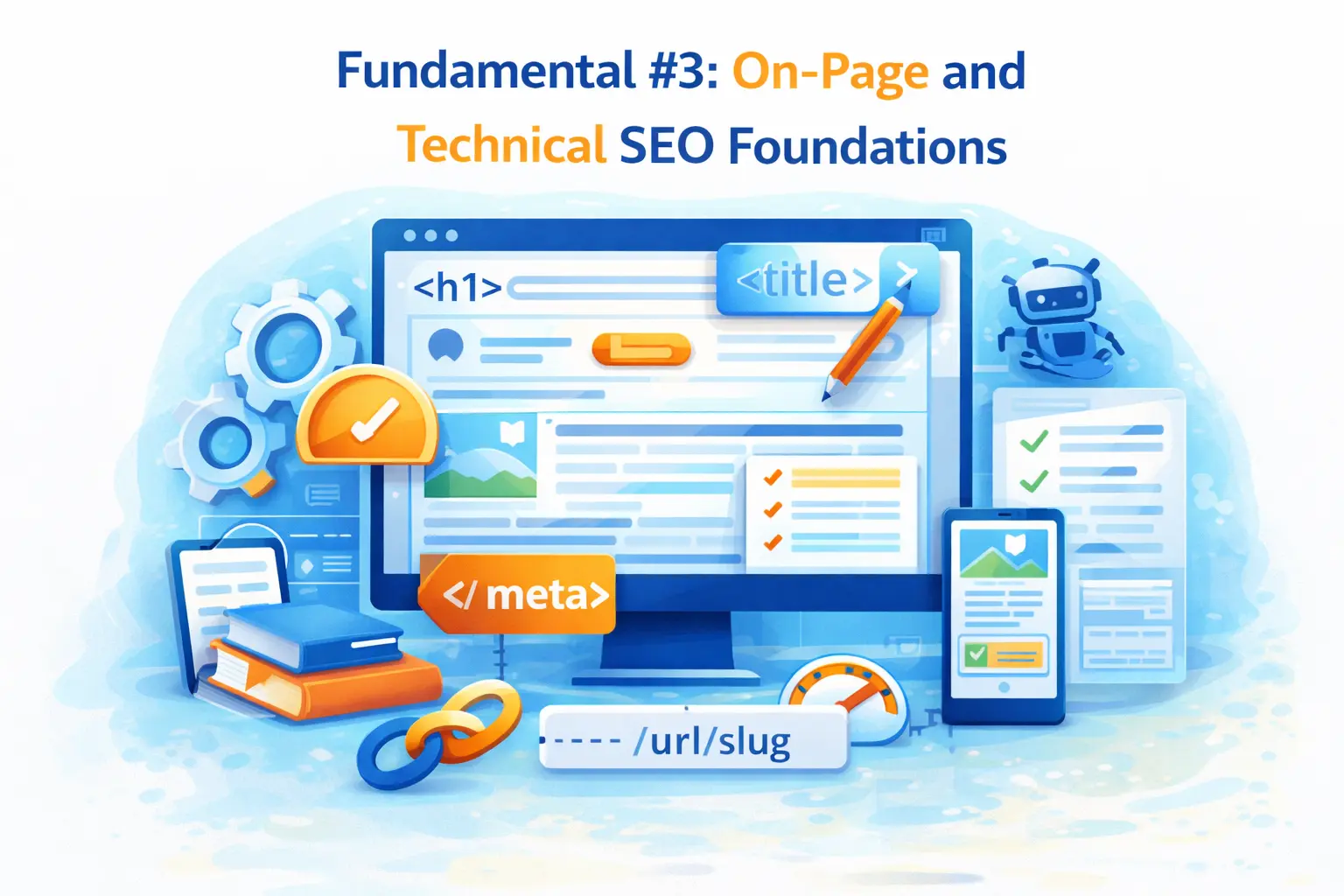
On-Page SEO Essentials
On-Page SEO Essentials
On-page SEO ensures that both search engines and users can easily understand and navigate your content. Core elements include:
- Clear, keyword-rich title tags
- Logical header structure (H1 → H2 → H3)
- Descriptive, compelling meta descriptions
- Clean URLs with relevant keywords
- Strategic internal linking to related content
These elements directly influence how Google interprets your page’s relevance and also impact your click-through rate from search results.
Technical SEO for Stability
Technical SEO creates the stable foundation your content strategy depends on. Without it, even your best content may go unranked or unseen. Key areas include:
- Mobile responsiveness across all devices
- Fast page loading speeds (especially on mobile)
- Secure browsing via HTTPS
- Proper crawlability and XML sitemap configuration
- Core Web Vitals — Google’s user experience metrics (LCP, FID, CLS)
With Google placing increasing importance on page experience signals, the technical health of a website is no longer optional — it directly affects ranking potential.
Why This Matters for Long-Term Growth
Even the most well-researched, expertly written content will fail to rank if search engines can’t crawl it efficiently or if users have a poor experience accessing it. Technical SEO is the infrastructure that everything else depends on.
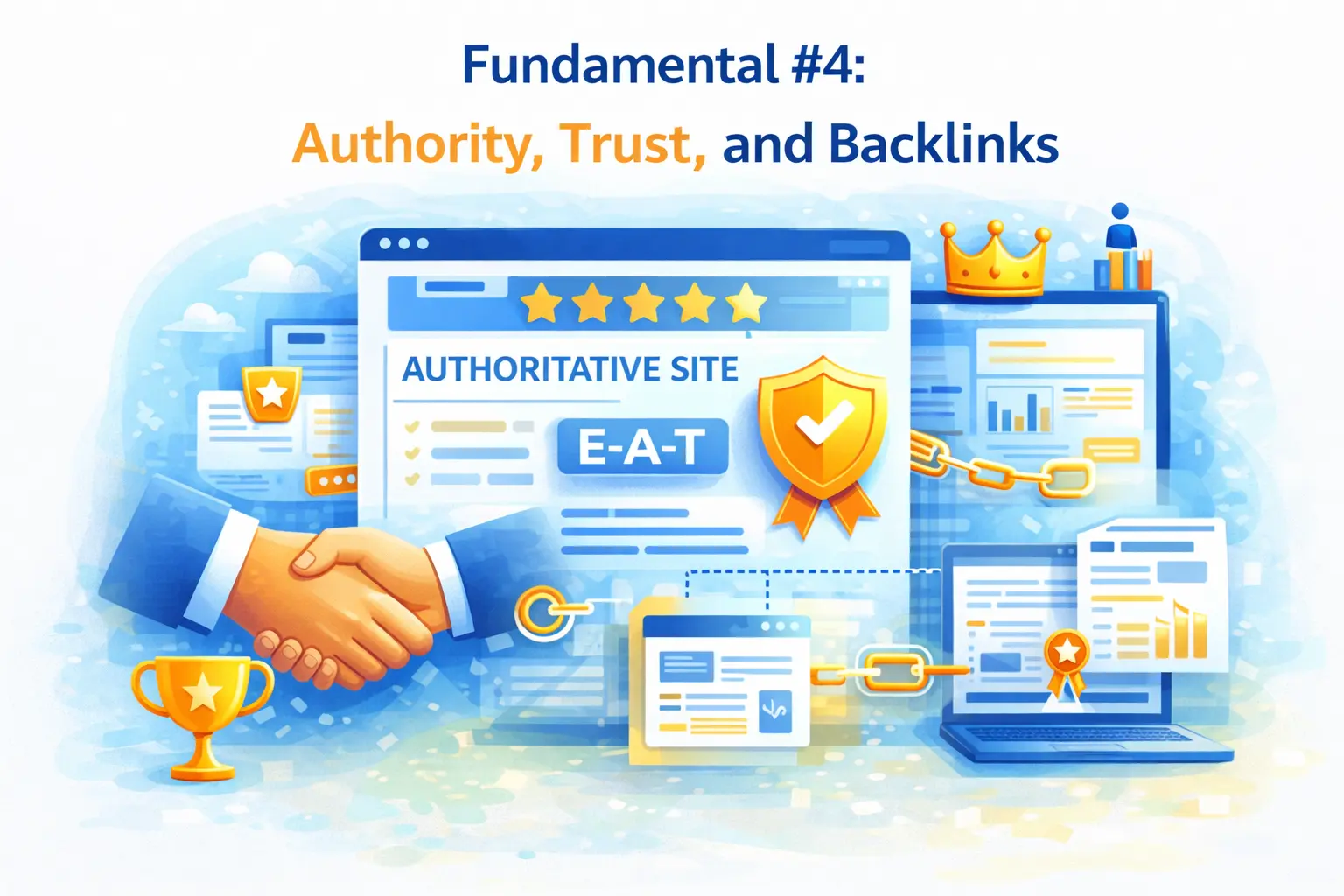
Fundamental #4: Authority, Trust, and Backlinks
Why Authority Signals Matter
Authority is built through external signals that demonstrate your site’s credibility and reliability to Google. Backlinks from reputable, relevant websites remain one of the strongest ranking signals in SEO — particularly when they are earned organically through genuinely valuable content.
Earning High-Quality Backlinks
Sustainable link building is about earning links based on value, not chasing volume. Effective strategies include:
- Publishing original research, data studies, or in-depth industry guides
- Thought leadership content that earns citations from other websites
- Digital PR campaigns and strategic brand mention outreach
- Creating genuinely useful tools or resources others want to reference
Low-quality or manipulative link tactics may produce short-term ranking boosts, but they carry significant long-term risk — including manual Google penalties that can remove pages entirely from search results.
Trust and E-E-A-T
Google’s E-E-A-T framework is central to how it evaluates content quality, particularly for topics that affect users’ finances, health, or major decisions. E-E-A-T stands for:
- Experience: Demonstrating first-hand, practical knowledge on a topic
- Expertise: Providing accurate, well-researched, high-quality information
- Authoritativeness: Being recognized as a credible source within your industry
- Trustworthiness: Maintaining transparency, accuracy, and reliability across your site
Improving your E-E-A-T signals — through author bios, accurate sourcing, clear business information, and consistent content quality — is increasingly important for ranking well in competitive niches.
Why This Matters for Long-Term Growth
Authority and trust take time to build and are genuinely difficult for competitors to replicate quickly. Once established, they act as a compounding moat that protects and grows your rankings over the long term.
Conclusion
Long-term SEO growth is not built on shortcuts or trending tactics. It is the result of consistently applying the core fundamentals: aligning content with search intent, building topical authority, maintaining technical excellence, and earning genuine trust and authority signals.
When you treat SEO as a long-term asset rather than a short-term tactic, it becomes one of the most valuable and cost-effective channels for sustainable business growth.
The businesses that dominate organic search in 2026 and beyond will be those that mastered these fundamentals years earlier — and kept improving them consistently.
At Webxtalk, we help businesses identify exactly where their SEO fundamentals need strengthening and build a clear roadmap to close those gaps — turning SEO into a reliable, compounding growth engine.
At WebxTalk, we help businesses identify gaps in their SEO fundamentals and turn them into long-term growth opportunities.
FAQs
Q1. What is the time frame for SEO to show long-term results?
SEO is a long-term strategy. While initial ranking improvements can appear within 3–4 months, meaningful organic traffic growth typically requires 6–12 months of consistent effort. The compounding nature of SEO means that results tend to accelerate significantly after the first year.
Q2. Can long-term growth still be achieved through SEO in 2026?
Absolutely. SEO remains one of the most cost-effective long-term growth channels available. With AI-generated content flooding search results, Google is placing an even higher premium on genuine expertise, original insights, and trustworthy sources — making quality-focused SEO more valuable than ever.
Q3. Which is the most critical SEO fundamental for long-term success?
No single fundamental dominates in isolation — they are interdependent. However, if forced to prioritize, search intent alignment and topical authority deliver the highest long-term returns, since they directly determine whether Google views your content as the best answer for a given query.
Q4. How does technical SEO affect long-term rankings?
Technical SEO is the foundation that allows all other efforts to perform. A site with great content but poor technical health — slow load speeds, crawl errors, or mobile issues — will consistently underperform its potential. Google’s Core Web Vitals update made this even more directly linked to rankings.
Q5. What is the difference between on-page SEO and technical SEO?
On-page SEO focuses on the content and structure of individual pages — title tags, headers, keyword usage, and internal links. Technical SEO focuses on the overall site infrastructure — crawlability, site speed, schema markup, and server health. Both are required for strong, sustained rankings.


 Yes, I Want Growth