
Answer Engine Optimization (AEO): How to Rank in AI Search in 2026
Answer Engine Optimization is the next wave in the evolution of traditional SEO, which is rapidly replacing user search links with direct answers. In 2026, individuals do not type long search queries and scroll through ten blue links. They instead present queries in natural language and expect immediate, accurate answers from AI-based search engines such as Google SGE, ChatGPT, Perplexity, and voice assistants.
AEO involves organizing information in a way that machines can understand it, trust it, and present the answer when users ask any queries. To the brands and creators, AEO is no longer an option; it is a prerequisite for digital presence.
What Is Answer Engine Optimization (AEO)?
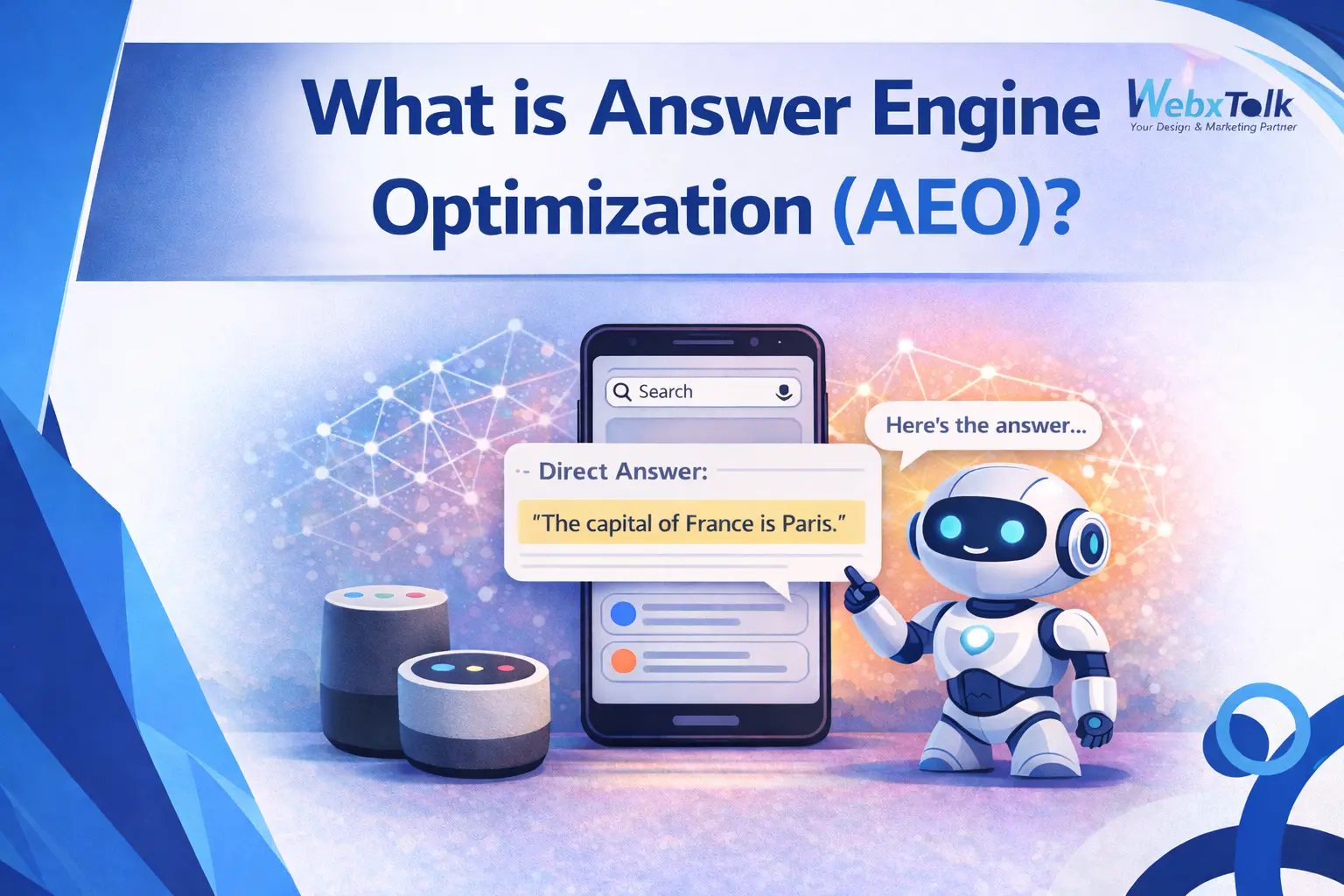
Answer Engine Optimization (AEO) refers to optimizing content so that it can be presented as a direct answer in AI-based search engines, voice assistants, and generative search results. Rather than competing to get the traditional rankings, AEO is looking to be the solution itself.
It relies heavily on:
- Natural language queries
- Well-organized question and answer groups.
- Structured data and schema
- Evidence of expertise and trustworthiness.
In comparison to traditional SEO, success is not determined solely by clicks but by appearing in featured snippets, AI summaries, and conversation replies.
Key Elements of Answer Engine Optimization
Answer Engine Optimization is all about ensuring that AI systems can understand, trust, and reuse your content by artificial intelligence systems. Answer engines do not read pages the way people do; they scan for clarity, relevance, and context.
Strong AEO performance is always based on some underlying factors:
- Well-defined, question-oriented headings that closely match how users search or speak.
- Brief responses at the beginning of the content, preferably in the first few sentences of a paragraph.
- Structured data and schema markup to facilitate machine understanding of meaning and relationships.
- Credibility indicators, including factual information, professional authorship, and periodic topical updates.
When these factors are combined, content does not focus solely on ranking, but rather on being the most credible answer that can be given.
A Quick Comparison: SEO vs. AEO vs. GEO
Search optimization does not just stop at ranking web pages on Google. With AEO and GEO complementing traditional SEO as AI-based platforms redefine how users find information, it is important to consider these strategies as an alternative to traditional ones. Understanding the difference between SEO, AEO, and GEO can help businesses to modify their content to be visible in both search engines and generative AI systems.
|
Factor |
SEO (Search Engine Optimization) |
AEO (Answer Engine Optimization) |
GEO (Generative Engine Optimization) |
| Primary Objective | Rank web pages on search engines | Appear as direct answers to user queries | Get cited or mentioned in AI-generated responses |
| Primary Platforms | Search engines (e.g., Google, Bing, and others) | Answer-focused search features, voice assistants, AI overviews | Generative AI systems (e.g., ChatGPT, Perplexity, Google Gemini) |
| Main Focus Area | Keywords, backlinks, on-page seo & technical SEO. | Search intent, clarity, structured answers | Entity authority, topical depth, citations |
| Content Format | Long-form, SEO-optimized pages | Concise, FAQ-based, Q&A-style content | Context-rich, experience-driven content |
| Search Result Type | Organic listings (blue links) | Featured snippets, AI summaries, zero-click answers | Conversational AI responses |
| Success Metrics | Rankings, organic traffic, conversions | Visibility, impressions, answer ownership | Brand mentions, citations, AI recall |
| User Journey Role | Brings users to the website | Solves queries instantly | Builds long-term brand trust in AI systems |
Expert Takeaway: SEO drives discovery, AEO delivers answers, and GEO builds authority inside AI.
How Answer Engine Optimization Actually Works?
It operates by matching content to the manner in which AI systems perceive meaning, and not just keywords. These systems examine context, intention, associations among entities, and the trustworthiness of the source, and then determine which information to present.
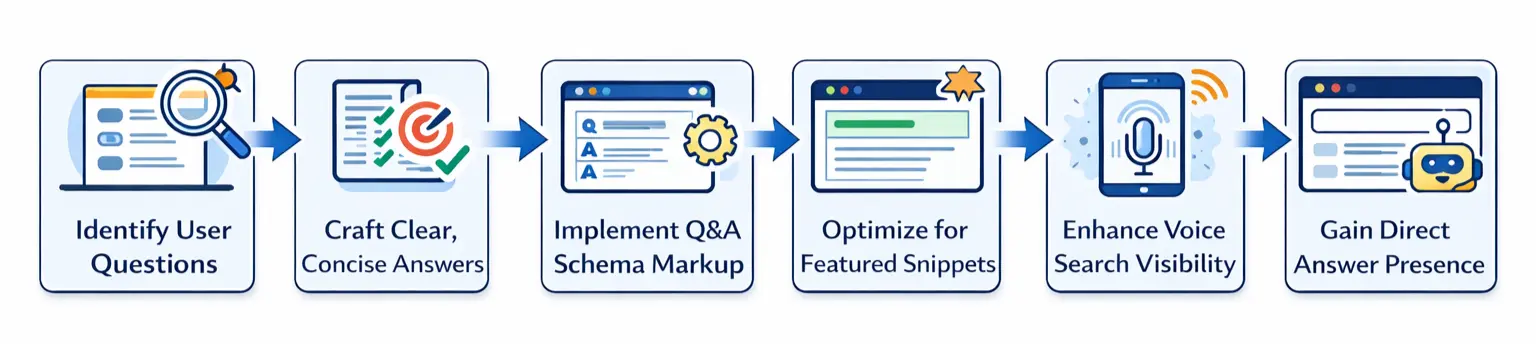
For example, when a person asks a question to a voice search or an AI assistant, the engine goes out to find content that already contains the question and answers it. Those pages that hide answers under too much introduction or advertisement are ignored by AI systems, even if they rank well on the traditional ranking.
Why is AEO Matters for Brands and Content Creators?
AEO is important because rankings no longer guarantee visibility. Many AI-generated answers don’t even show traditional links, which means that brands are becoming invisible— even when they are ranked well organically.
For Brands, AEO helps in building authority and trust, owning informational high-intent queries, and being visible in zero-click searches. It strengthens brand recall and influences future purchase decisions.
For Creators, it guarantees that content can be found on AI platforms. Answer engines mentioning or referring to you means you are an expert, which builds credibility over the long term. Over time, this consistent recognition builds credibility, expands reach, and establishes long-term authority in your niche.
How to Appear in Answer Engines?
Answer engines require a change in mindset to create their content. You must think in terms of instant understanding rather than writing long pages that gradually reach the point. Answer engines prefer content that reflects the way users ask questions and answer them in a natural way.
To improve your chances of being selected, focus on strategies such as:
- Writing section headings in the form of questions or question-like definitions
- Answering the main question in the first several lines of each section
- Expanding with further context, examples, and explanations
- Revising older material to ensure answers are correct and up to date
This approach allows AI systems to extract clean responses while still giving human readers depth and value.
What Are the Tools & Techniques to Improve AEO
The optimization of Answer Engines is not determined by an individual tool but the quality of the combination of many tools. The right tools make optimization manageable. Here’s what works:
- Content analysis tools, such as MarketMuse and Clearscope, identify gaps and missing topics in your content.
- Frase and SurferSEO are AI-based content analyzers; they analyze the relevance of your content to the query.
- Schema generators such as Schema App make structured data implementation easier.
- Entity recognition tools identify important ideas that can strengthen topical authority.
What are the Most Common Mistakes to Avoid?
Experienced marketers struggle with the optimization of the answer engine. Here’s what causes problems:
Vague or Incomplete Answers
Half-answers don’t make sense. When you are answering a question, give complete details.
Missing Structure
Big blocks of answers make it difficult for AI to understand. Break your content into easy-to-read parts with clear headings.
Keyword Stuffing
Answer engines use natural language and semantic relevance instead of keyword density. Focus on content depth and topic coverage.
Outdated Content
Information expires, regular audit and updates keep your content competitive.
Ignoring Schema Markup
Skipping structured data is equivalent to hiding your content from answer engines. It’s that simple.
Is Answer Engine Optimization Worth the Investment?
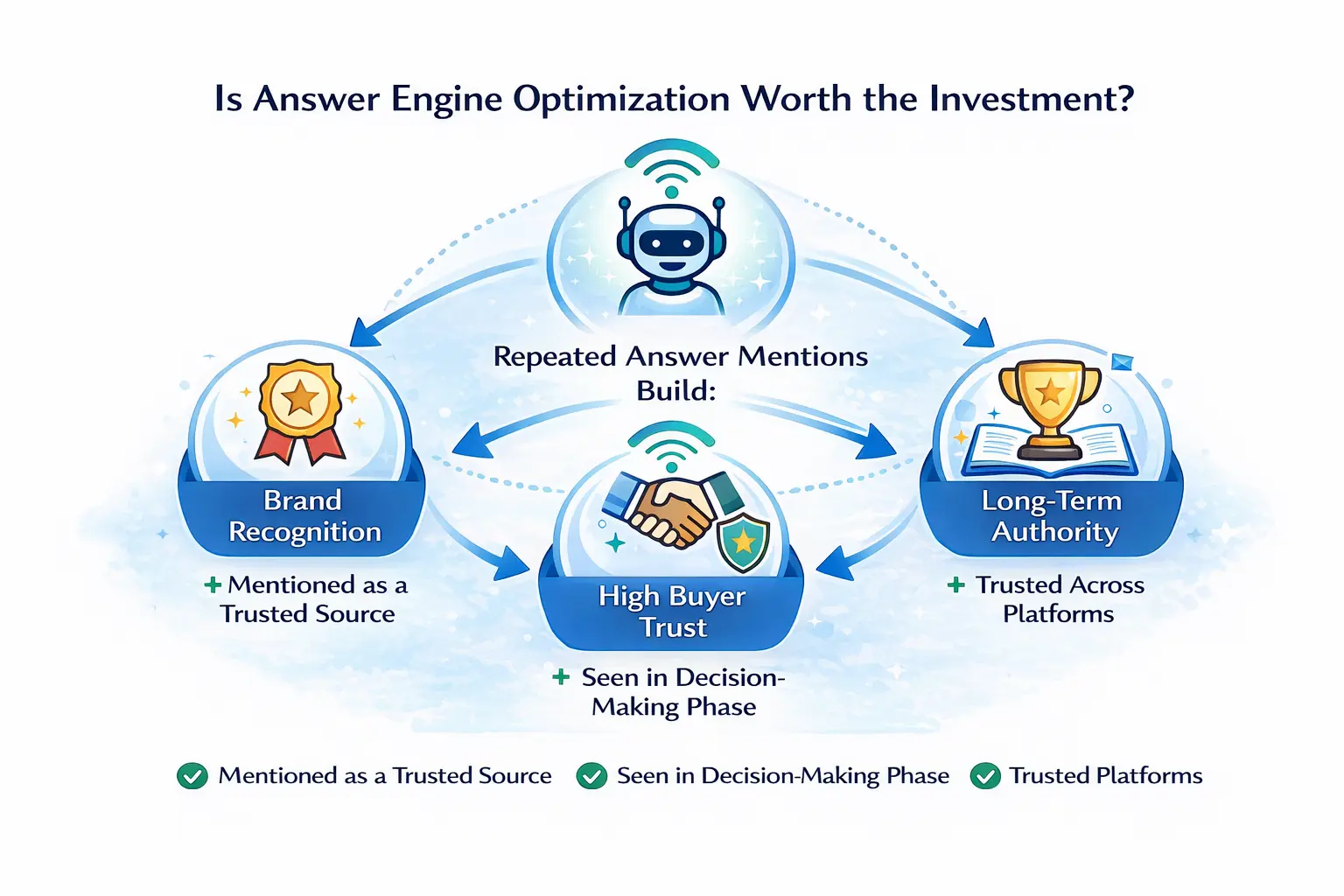
Yes, investing in AEO is worthwhile as search behaviour is constantly growing and going towards AI-driven and zero-clicks. Although the AEO may not drive immediate traffic to your website, it will bring in the long-lasting effect of having your brand as a reliable source of information.
The repeated mention of your content by an answer engine develops authority, recognition, and credibility that can no longer be achieved through traditional rankings.
From a business perspective, AEO upholds high intent visibility. Users who see your brand mentioned in direct answers are more likely to trust it when they are in their decision-making phase. Over time, this trust increases across multiple platforms, including AI assistants and voice search.
What is the Future of Answer Engine Optimization?
The future of Answer Engine Optimization is determined by conversational search, personalization, and multi-format responses. Artificial intelligence will respond to users’ queries depending on their history, location, and intent to avoid providing the same answer to all users.
Content that demonstrates proven expertise, personal experience, and situational knowledge will be more attractive. Businesses who adap early will have competitive advantages, and slow movers will face risk. In the future, Answer Engine Optimization will be an essential element of SEO strategies, as it will assist companies remain findable in future search experiences.
Conclusion
Answer Engine Optimization (AEO) is not a trend; it is the new way of making your content visible to others. As AI search results are taking more place, the brand being the first to appear as the main answer gains control over the audience.
Start AEO with WebxTalk, organize your content, use schema, provide complete information, and develop effective topical authority. Early adopters will have long-term visibility and trust.

Frequently Asked Questions
What is Answer Engine Optimization (AEO) in simple terms?
AEO refers to the act of ensuring that content is optimized in a manner that will be easily processed by AI tools that will then provide the information in the form of a direct answer to user queries.
Is SEO replaced by AEO?
No, SEO is not replaced by AEO. Answer Engine Optimization is based on the conventional principles of SEO, such as crawlability, internal linking, and topicality.
How to do AEO in SEO?
AEO in SEO is the organization of the content according to actual questions of the user, placing clear answers at the top, using natural language, and structured information, such as FAQ schema.
How to write content for AEO?
When writing content for AEO, focus on readability rather than keywords. Headings should be in the form of questions, direct answers should be given in simple language, and supported with context.
How long does it take to see AEO results?
AEO results are not constant; however, within a few weeks, brands typically get citations and mentions when the content is organized and optimized correctly.




 Yes, I Want Growth