
4 Fundamentals of SEO: Which Can’t be Ignored for Long-Term SEO Growth
Search Engine Optimization (SEO) is often misunderstood as a collection of quick fixes – keyword stuffing, backlink shortcuts, or chasing algorithm updates. These strategies can also provide short-term success, but they rarely provide long-term success. In this blog, we’ll understand the 4 fundamentals of SEO for long-term growth. These are the principles that have been adopted by successful websites in order to establish steady and compounding organic traffic over the long-term.
Why Long-Term SEO Growth Depends on Fundamentals?
SEO does not happen instantaneously; it is an investment. The mission of Google is to provide the most relevant, trustworthy, and useful information to users. Websites that achieve this purpose, such as those that emphasize user experience, quality of content, and authority, are rewarded with steady rankings and traffic.
Rather than responding to each update to the algorithm, address the basics of SEO, and you can:
- Grow traffic that keeps increasing.
- Reduce ranking volatility.
- Build credibility and trust in your niche.
Let’s explore the four core fundamentals that make this possible.
Fundamental #1: Search Intent and User-Centric Content
Understanding Search Intent in SEO
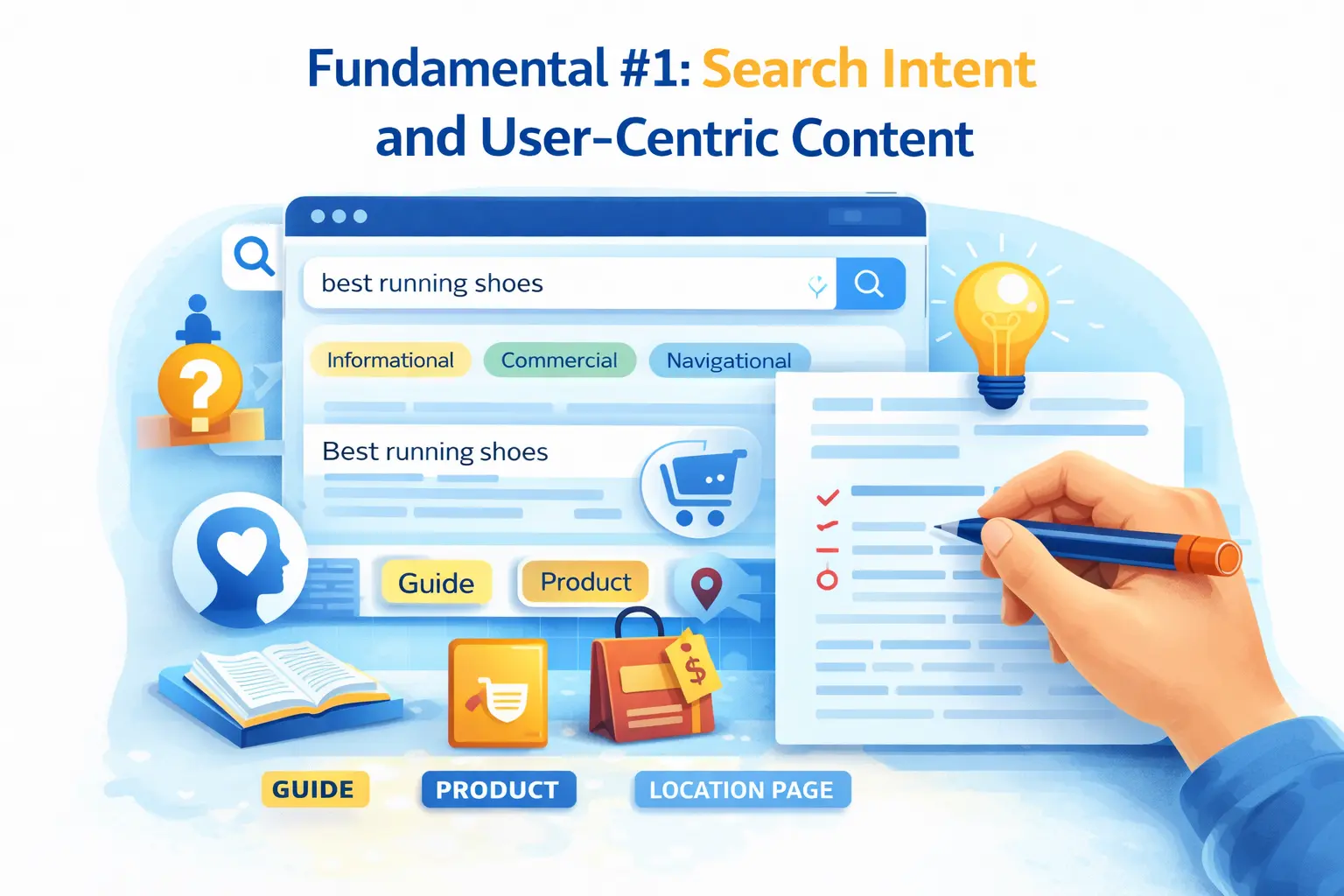
Search intent is the reason why a user searches. Google does not simply focus on content that has the most appropriate keywords identified through keyword research, but rather on content that meets this purpose.
There are four main types of search intent:
- Informational: Questions of knowledge (e.g., What is SEO?)
- Navigational: Searching for a certain brand or page. (e.g., SEO services in Phoenix)
- Business: Comparison before buying.(e.g., Top 10 Digital Marketing Companies in USA)
- Transactional: Willingness to act or purchase. (Affordable SEO packages)
Aligning Content With Search Intent
To achieve regular rankings, your content should correspond to what users are supposed to be looking for. This means analyzing:
- First-page rankings of search results.
- Type of content (blog, guide, listing, video).
- Richness and depth of content to compete with.
When the content matches intent, engagement metrics like time on page will automatically increase, and bounce rates will decrease, which are indicators of long-term SEO success.
Why this matters for long-term growth:
Search intent does not vary much, even with variations in algorithms. Information that truly addresses users’ queries continues to work in the long term.
Fundamental #2: Topical Authority and Content Depth
What Is Topical Authority?
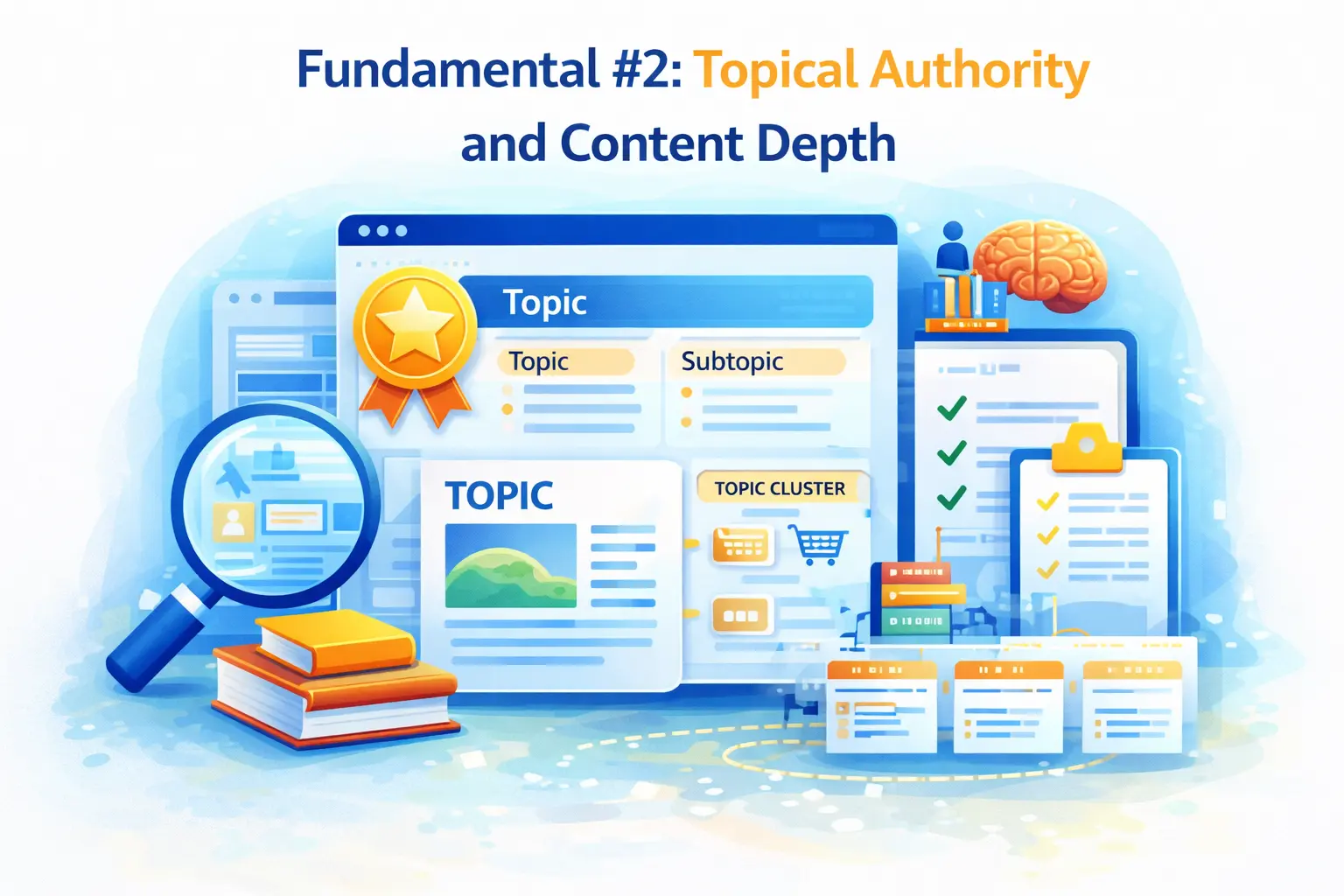
Topical authority is Google’s evaluation of the extent to which a site thoroughly covers a topic. Google is increasingly evaluating sites not as individual pages in isolation, but as a whole, and assessing their ability to demonstrate expertise across an entire topic.
Building Topic Clusters
Topic clusters comprise one of the best methods to develop topical authority, which includes:
- A pillar page that generally covers a Topic.
- Several supporting articles that elaborate on subtopics.
- Strategic internal linking between related pages
This structure is useful for search engines to understand how content is related, as well as for directing users through a logical learning process.
Updating and Expanding Content
Relevancy also requires maintaining content relevance for long-term SEO growth. Frequently updating high-performing pages with fresh information, statistics, or illustrations can help maintain rankings and authority.
Why this matters for long-term growth:
Websites that exhibit consistent depth and expertise in a given topic perform better and are more resilient to ranking fluctuations and competition.
Fundamental #3: On-Page and Technical SEO Foundations
On-Page SEO Essentials
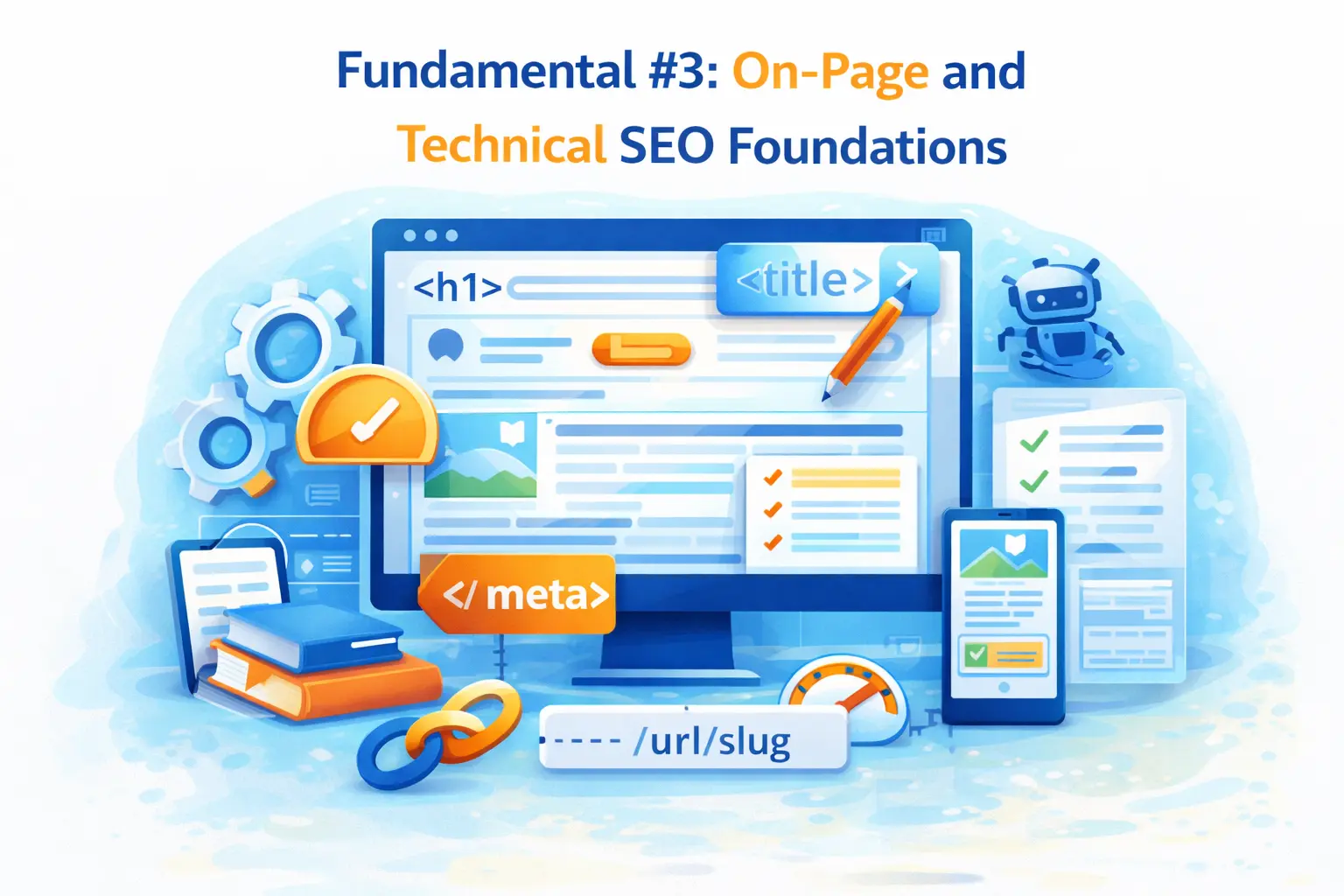
On-page SEO makes your content easier for search engines and users to understand. Its core elements include:
- Clearly descriptive title tags.
- Rational organization of headers (H1, H2, H3).
- Internal linking and clean URLs.
- Efficient meta descriptions.
These factors help search engines interpret relevance and enhance click-through rates in search results.
Technical SEO for Stability
Technical SEO supports long-term performance by making your site accessible and efficient. Key areas include:
- Mobile responsiveness.
- Fast loading speeds.
- Secure browsing (HTTPS).
- Good indexing and crawlability.
With Google paying increasing attention to user experience indicators such as Core Web Vitals, the technical health of a website is no longer optional.
Why this matters for long-term growth:
Even the best content will not perform well if it is not accessible to search engines or users due to technical issues.
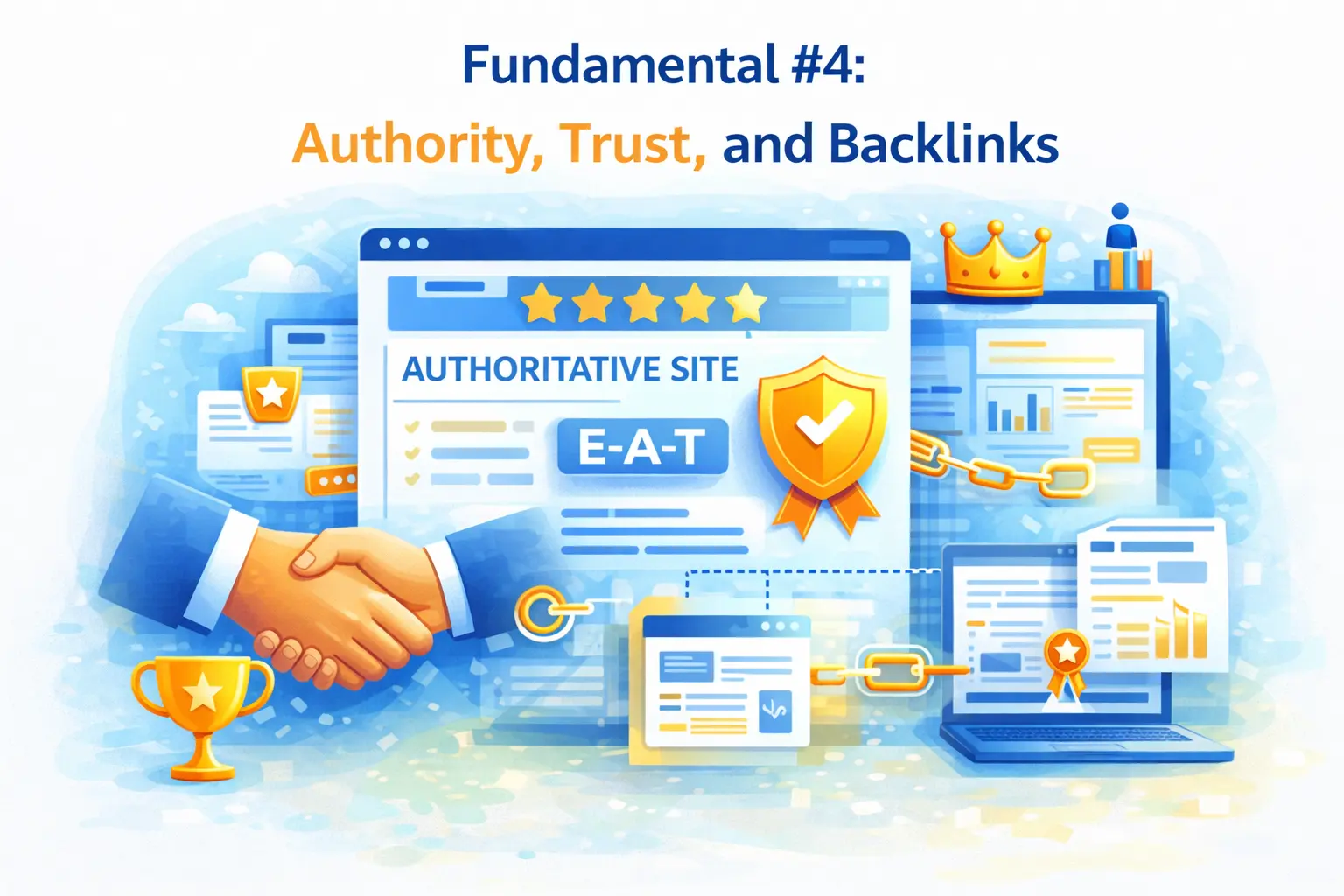
Fundamental #4: Authority, Trust, and Backlinks
Why Authority Signals Matter?
Authority is built through signals that demonstrate credibility and reliability. Backlinks from reputable sites remain one of the strongest indicators of authority, especially when earned organically.
Earning High-Quality Backlinks
Sustainable link building is value-based rather than volume-based. Effective strategies include:
- Publishing original research or in-depth guides
- Sharing professional insights and thought leadership.
- Online PR and brand mentions.
Low-quality or misleading link tactics may result in short-term gains, but in the long run, they can lead to penalties.
Trust and E-E-A-T
Google’s E-E-A-T framework emphasizes:
- Experience: Demonstrating practical knowledge.
- Expertise: Providing high-quality, well-researched information.
- Authoritativeness: Recognition within your industry.
- Trustworthiness: Transparency and reliability.
Why does this matter for long-term growth?
Trust and authority take time to build and are difficult for competitors to replicate quickly.
Conclusion
Shortcuts and trends do not lead to long-term SEO growth. Instead, growth is achieved through consistent application of established fundamentals. With an emphasis on search intent, topical authority, technical excellence, and trust-building strategies, you can develop a system that supports sustainable organic growth.
When SEO is viewed as a long-term investment rather than a short-term tactic, it emerges as one of the most valuable assets for any website.
At WebxTalk, we help businesses identify gaps in their SEO fundamentals and turn them into long-term growth opportunities.
FAQs
Q1. What is the time frame for SEO to show long-term results?
SEO is a long-term strategy. Although early gains can be seen within a few months, long-term growth typically requires 6–12 months of sustained effort.
Q2. Can long-term growth still be achieved through SEO?
Yes. SEO remains one of the most cost-effective long-term growth strategies for organic traffic when built on solid foundations.
Q3. Which is the most critical SEO factor for long-term success?
No single factor dominates, but aligning content with search intent and establishing topical authority is among the most important for long-term success.


 Yes, I Want Growth